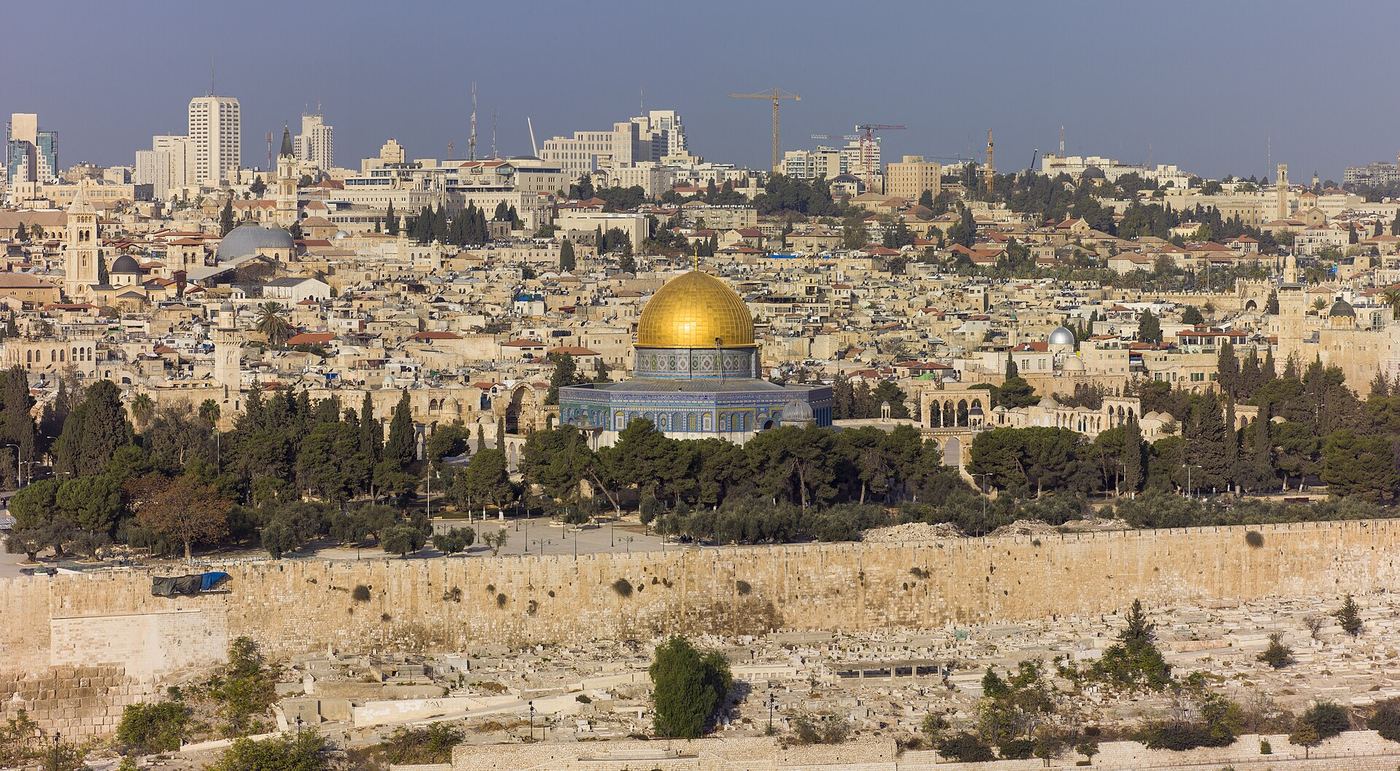
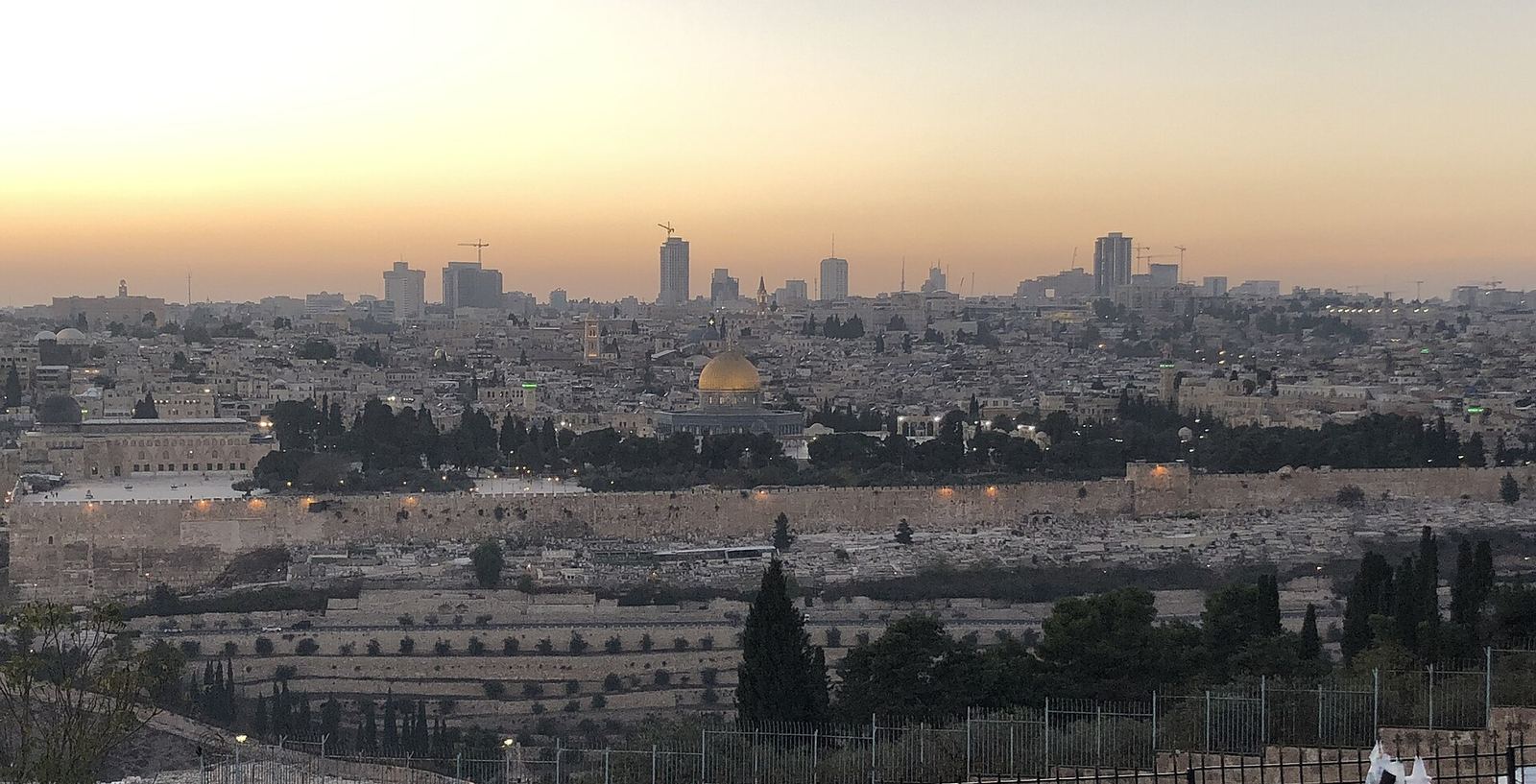
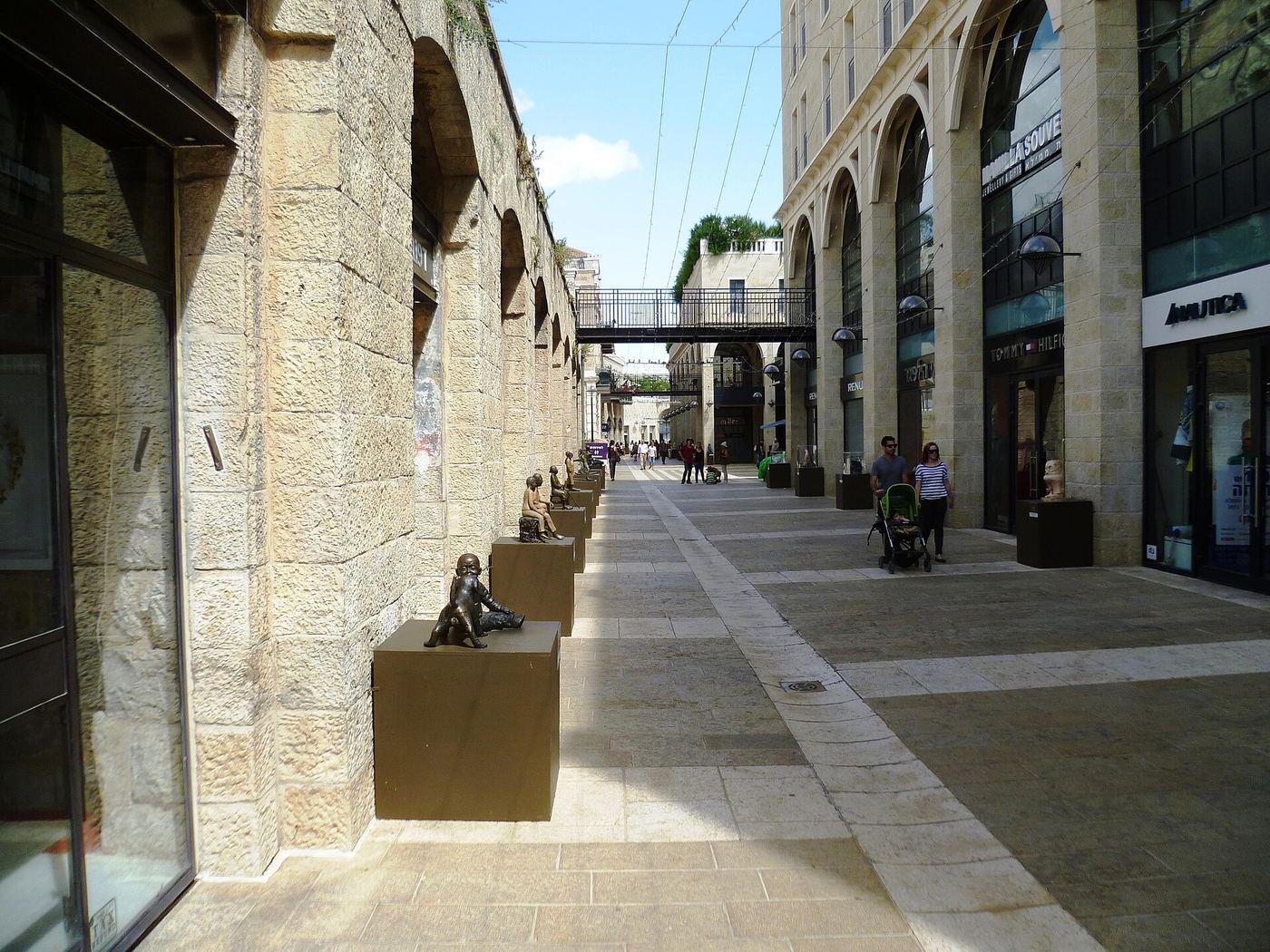
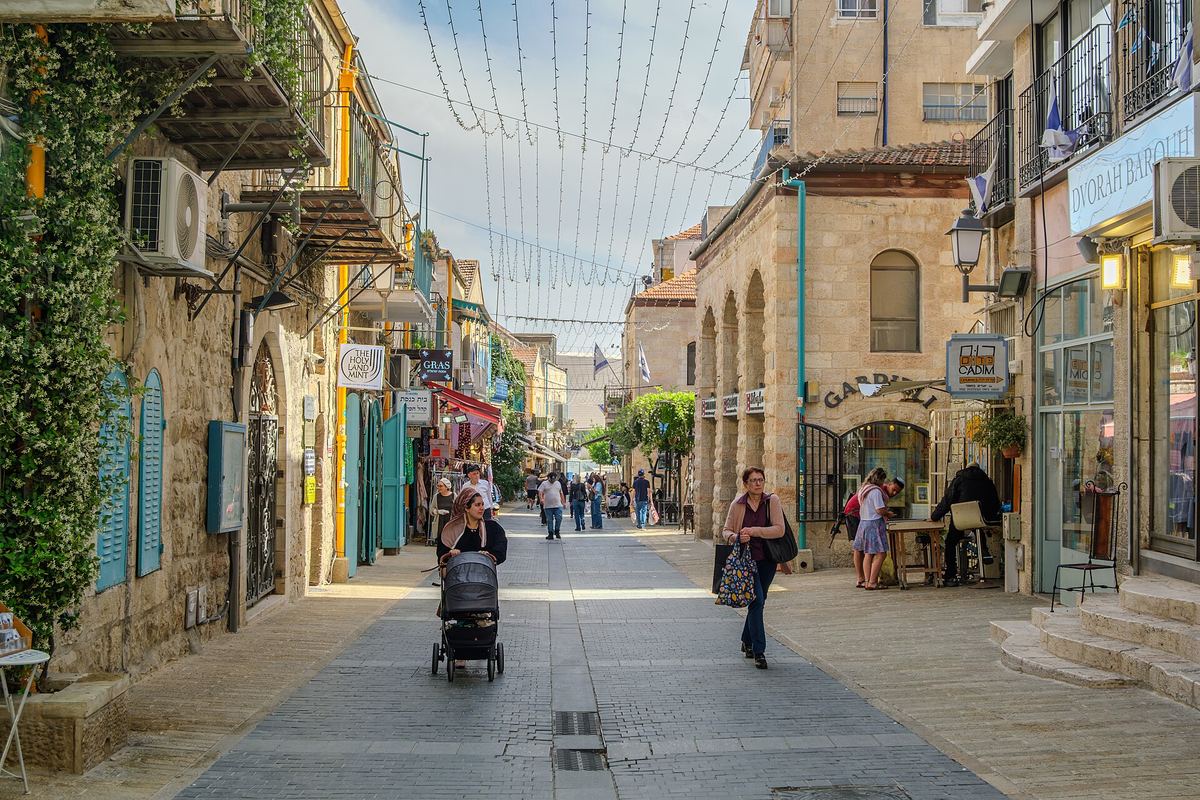
Wednesday, November 4 to Sunday, November 15, 2026
For Ava Jahn · The Arthur Hotel, Jerusalem
Eleven nights at the Arthur: Bradley on the weekdays, two quiet Shabbats, the Old City, the Dead Sea and a day in Tel Aviv. Then Athens.
The week at a glance
Tap a day to jump to it. Times are local.
Eleven nights in one hotel. Bradley on the weekdays, two quiet Shabbats on foot, two guided days (the Old City and the Dead Sea), an easy day in Tel Aviv and an open Wednesday, with rest days between. Then one full day in Athens.
Where the week goes, and the Sunday walk inside Jerusalem.
Israel, with the two days out of Jerusalem. Distances are approximate. On a phone, slide the map sideways or pinch to zoom.Central Jerusalem and the Old City. The Arthur is the home mark; the Sunday walk is the dashed blue line. On a phone, slide the map sideways or pinch to zoom.
Sunday, November 8Old City on foot: Jaffa Gate, the quarters, the Western Wall and tunnels (Jerusalem map)
Monday, November 9Train to Tel Aviv and Jaffa, back before dark
Thursday, November 12Coach tour: Masada, Ein Gedi, the Dead Sea; 7:45 am to about 5:30 pm
Walks from the ArthurDotted gray lines with minutes (Jerusalem map)
Wednesday, November 4 · Day 1 of 12 · Bradley meets you
High 66–68°F (19–20°C), low 50–52°F (10–11°C), rain on about 3 days in the month.Wear: Layers and a light rain jacket; the evenings are cool.Typical for mid-November
Easy. A long travel day with nothing to do at the end of it except check in, eat an early dinner and go to bed at a normal hour.
Landing at Ben Gurion
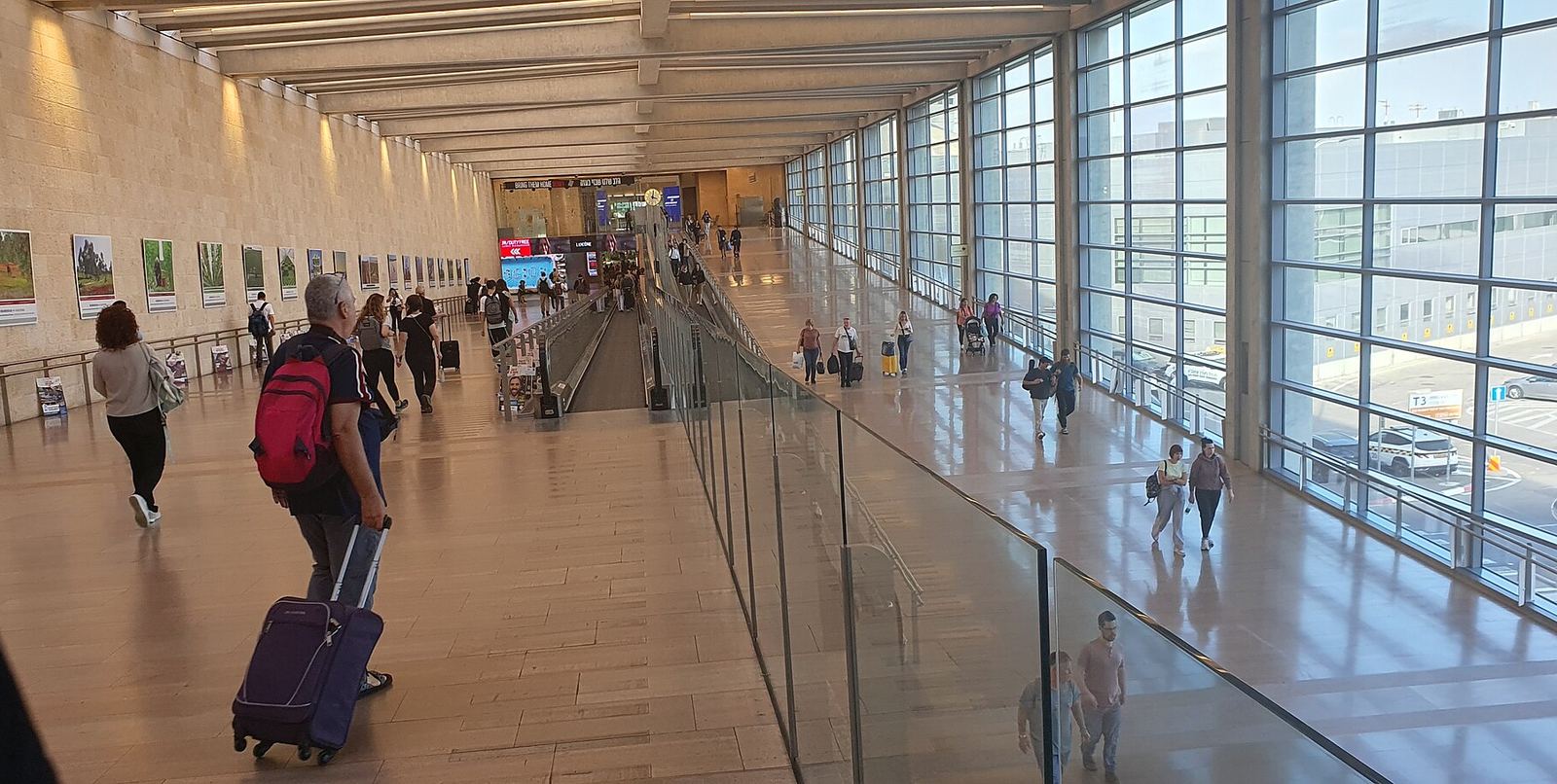
Air France AF962 from Paris lands at Ben Gurion Airport at 2:15 pm. Passport control and bags usually take about an hour. Have your passport and a copy of your ETA-IL entry permit ready. Israel does not stamp passports; at passport control you are given a small entry card instead. Keep it with your passport for the whole trip, because hotels ask to see it.
Bradley meets you either at the airport or at the hotel to confirm. If he is not at arrivals, take a taxi from the arrivals hall and show the driver the hotel's address in Hebrew, printed on the Practical page.
The drive up to Jerusalem
The taxi takes 45–60 minutes. The road leaves the flat coastal plain and climbs into the Judean hills, past pine-covered slopes and, on the way up, the rusted armored vehicles left beside the road as a memorial to the convoys that tried to reach the besieged city in 1948. Jerusalem sits about 2,500 feet up, which is why it is cooler than the coast. You should reach the hotel between 4:30 and 5:30 pm, close to sunset, so you will likely see the city's stone turn gold and then go dark as you arrive.
The Arthur Hotel
The Arthur is on Dorot Rishonim, a pedestrian lane in Nahalat Shiva in the City Center, so the taxi stops at the nearest corner and you walk the last few steps. It is the sister of the Harmony Hotel, one street over, run by the same family, and known for its staff. Breakfast is included every morning, and there is an afternoon wine hour, which is a good way to meet other guests on a day when you do not want to go anywhere. This is home for all eleven nights.
An early dinner in Nahalat Shiva
Nahalat Shiva was founded in 1869 by seven families as one of the first Jewish neighborhoods outside the Old City walls. Today its old stone lanes are full of small restaurants and cafes, and they start right outside the hotel door. Eat early and close by. The goal tonight is simple: stay up until a normal bedtime so you wake up on Jerusalem time.
The day, hour by hour
AF962 leaves Paris, after the overnight flight from Newark.
Land at Ben Gurion Airport, Tel Aviv.
Through passport control with your bags (about an hour). Meet Bradley at arrivals, or take a taxi from the arrivals hall to confirm.
Taxi to the Arthur Hotel, Dorot Rishonim 13: 45–60 minutes, depending on when you clear the airport.
Arrive at the hotel. Check in.
Sunset.
Early dinner in the Nahalat Shiva lanes outside the door.
Bed, at a normal bedtime.
Sunset is at 4:47 pm, so most of the drive up is in late-afternoon light and you will arrive at dusk. Sunrise tomorrow is 5:59 am.
Bring and wear
Typical for mid-November: Tel Aviv around 74–76°F (24°C) in the afternoon, Jerusalem cooler, with an evening low of 50–52°F (10–11°C). Wear layers off the plane and keep a sweater in your carry-on.
Passport and a printed copy of the ETA-IL permit in an easy pocket.
Your phone with the eSIM working, Gett installed with a card attached, and the hotel's address in Hebrew.
Some shekels or a card for the taxi.
Medication for the trip plus a week, in your carry-on.
Before you leave home
ETA-IL entry permit approved, with a printed copy packed.
Passports, both flight confirmations, and this guide on your phone.
eSIM installed, and Gett working with your card.
Bradley's number saved to confirm, along with the hotel's (+972 2-623-9999).
Where Bradley meets you, airport or hotel to confirm.
Thursday, November 5 · Day 2 of 12 · Bradley for dinner
High 66–68°F (19–20°C), low 50–52°F (10–11°C), rain on about 3 days in the month.Wear: Layers and a light rain jacket; the evenings are cool.Typical for mid-November
Easy. Nothing planned and nothing booked. Sleep, eat, and if you feel like it, one short walk within 15 minutes of the hotel.
Why a day off so soon
You will have crossed seven time zones overnight. Today is for sleeping late, a long breakfast at the Arthur, and getting your bearings in the streets around the hotel. Everything below is optional. Pick one, or none, and decide on the day.
The lanes around the hotel are the oldest part of the City Center: low stone buildings from the late 1800s, courtyards, cafes and small shops, most of them closed to cars. A few minutes away is Ben Yehuda Street, a wide pedestrian street named for Eliezer Ben-Yehuda, who did more than anyone to turn Hebrew back into an everyday spoken language in the late 1800s. It is the place to sit with a coffee and watch the city go by. You can walk all of it in under an hour and never be more than a few minutes from your room.
The Mamilla promenade at sunset
Mamilla is an open-air shopping street of pale stone that runs from the edge of the City Center up to Jaffa Gate. It is 10 minutes on foot from the hotel, flat, and wide. Go about 4:15 pm and walk toward the Old City walls as the light goes; sunset is at 4:46 pm. The walls catch the last light, and then the floodlights come on. It is also tomorrow's and Sunday's route to Jaffa Gate, so walking it once today makes those mornings easier.
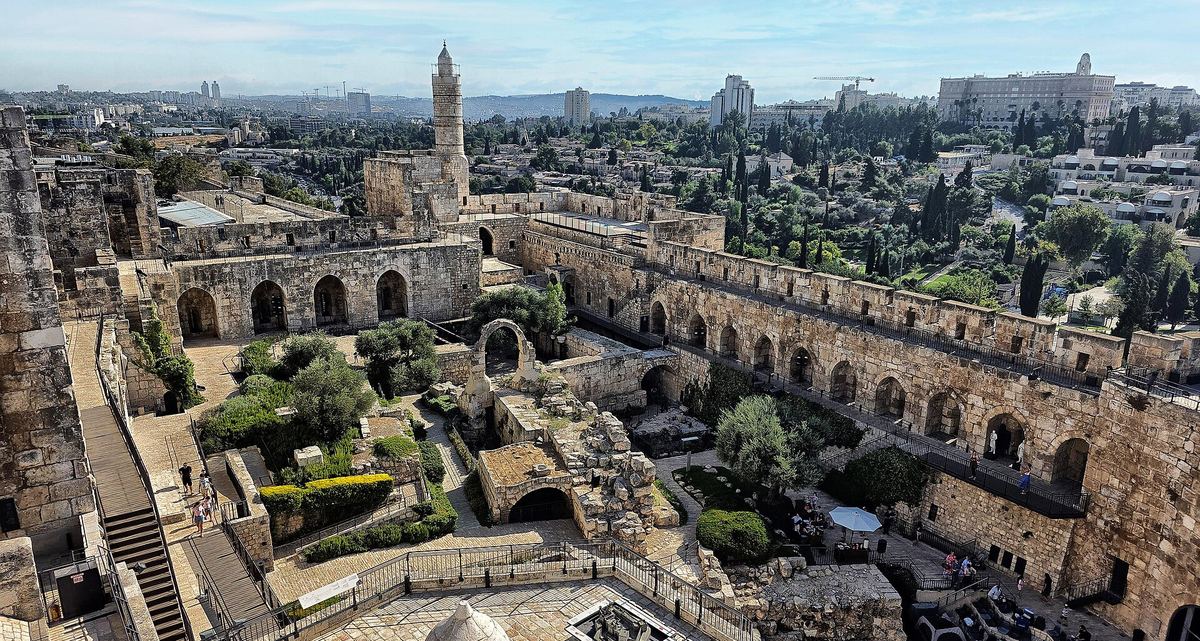
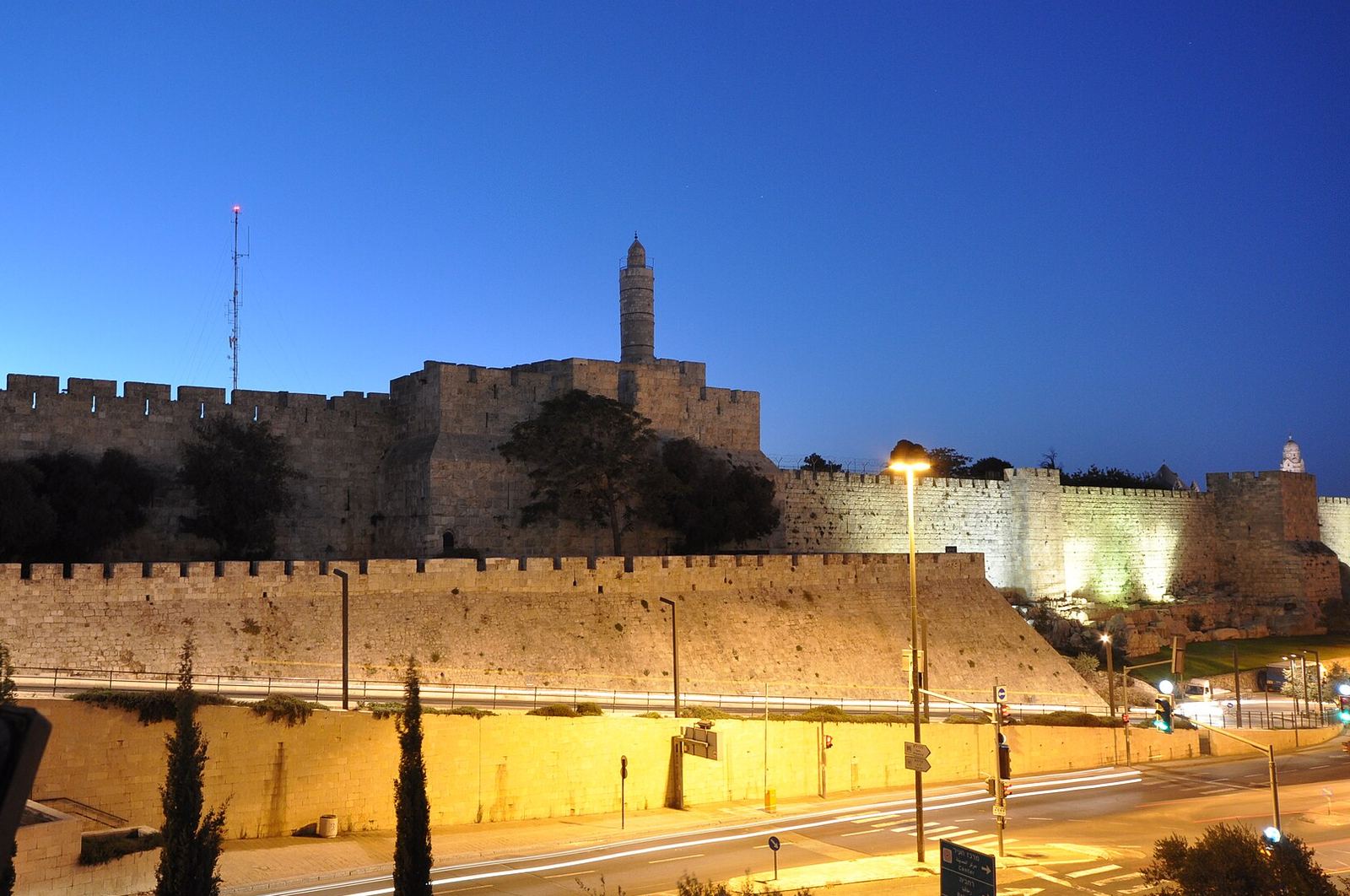
Just inside Jaffa Gate stands the Citadel, a fortress that has been rebuilt by almost every power that has held Jerusalem. The base of its biggest tower goes back to Herod, around 20 BCE; the slim minaret that gives the place its name was added in the 1600s, long after King David. Today it is the museum of the city's history, told room by room in the old guard rooms, with views from the ramparts over the Old City and the new. Tickets are sold at the door; opening hours to confirm. From the hotel it is 15–20 minutes on foot or a 10-minute taxi.
Dinner with Bradley
Bradley joins you for dinner. It is a chance to go over the next few days: Friday's food walk and Shabbat dinner, and how the two Shabbat days work. If you want to stay close, the Nahalat Shiva lanes are right outside.
The day, hour by hour
Wake when you wake. Breakfast at the hotel.
Optional: a slow loop through Nahalat Shiva and Ben Yehuda Street, a few minutes from the door.
Lunch nearby, then rest.
Optional: the Tower of David museum at Jaffa Gate, 15–20 minutes on foot.
Optional: walk the Mamilla promenade (10 minutes from the hotel) toward the walls.
Sunset.
Back at the hotel to rest before dinner. The Arthur's afternoon wine hour may still be on.
Dinner with Bradley.
Sunrise 5:59 am, sunset 4:46 pm. If you do the museum and Mamilla together, go to the museum first and come out onto Mamilla for sunset.
Bring and wear
Typical for mid-November in Jerusalem: high 66–68°F (19–20°C), low 50–52°F (10–11°C). Comfortable in the afternoon, cool after sunset.
Comfortable walking shoes with some grip.
A sweater or light jacket for the sunset walk and dinner.
A card and a little cash.
Tonight, for tomorrow
Settle the Friday food walk with Bradley (see tomorrow's page).
Confirm where Shabbat dinner will be.
Ask the front desk about Saturday lunch: whether they serve Shabbat lunch or can hold a cold plate for you.
Have 200–300 shekels (about $60–85) in cash ready for market stalls and tips.
Friday, November 6 · Day 3 of 12 · With Bradley in the morning
High 66–68°F (19–20°C), low 50–52°F (10–11°C), rain on about 3 days in the month.Wear: Layers and a light rain jacket; the evenings are cool.Typical for mid-November
Easy to medium. A food walk with Bradley in the morning, a rest in the afternoon, then an evening walk to the Western Wall as Shabbat begins at 4:05 pm.
Machane Yehuda on a Friday morning
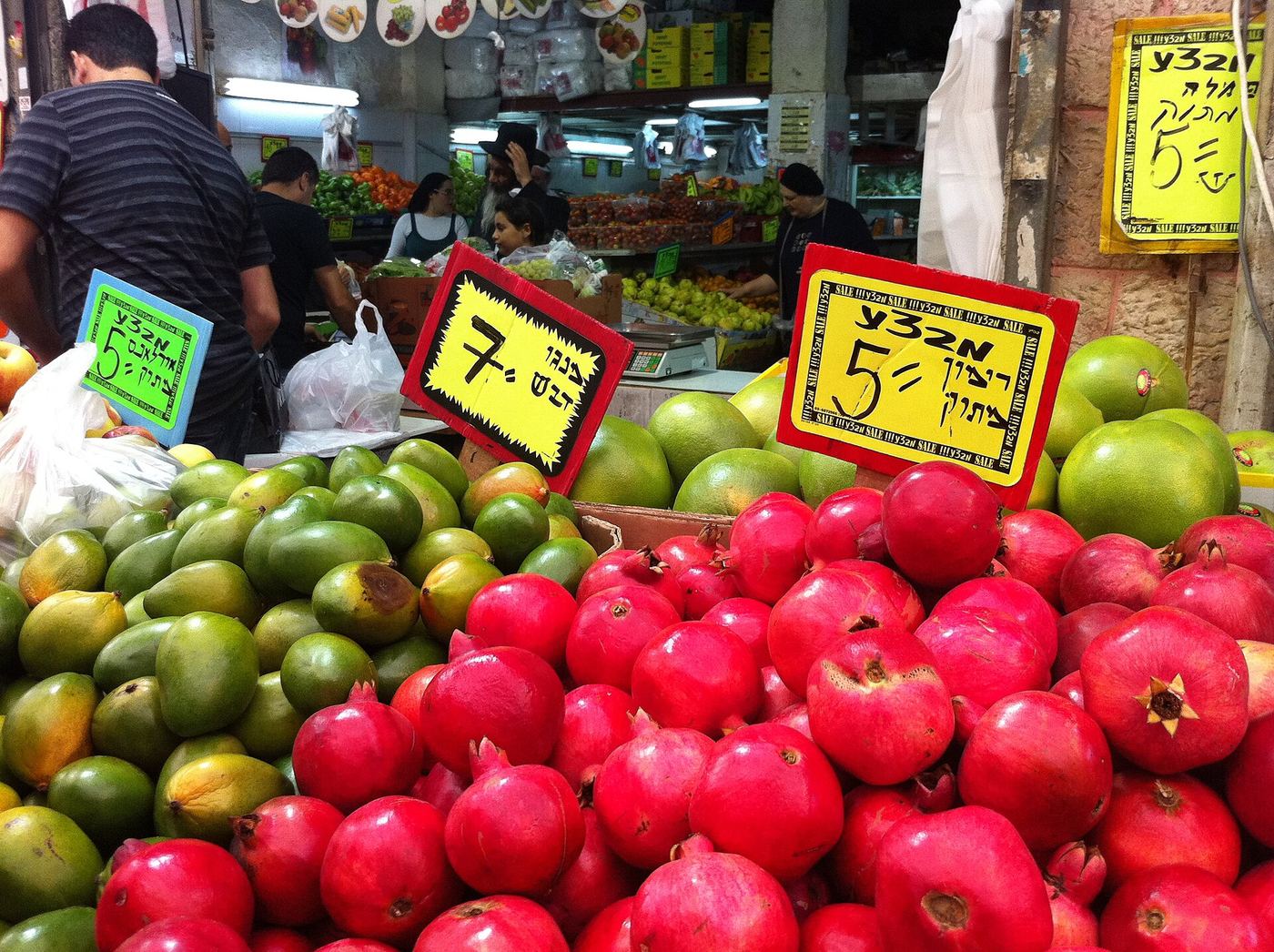
Machane Yehuda has been Jerusalem's main food market since the late 1800s: covered alleys and open streets of produce, spices, cheese, bakeries and small counters cooking to order. On Friday morning the whole city shops here before Shabbat, so it is at its busiest and liveliest. It is 15 minutes on foot from the hotel, straight along Jaffa Road, or two stops on the light rail. By about 2 pm it empties out and the shutters come down.
Friday morning food walk: pick one
Delicious Israel, Eat Jerusalem group walk. A guided tasting walk in English, 2–2.5 hours, $120 each ($240 for two). It runs only if at least 4 people sign up, and they confirm or cancel by a set date; ask for a 10 am Friday group.
Yalla Basta group walk. About 3 hours, 240 shekels each (about $69), 480 shekels for two (about $137). It runs on the weekdays they confirm, so ask them about Friday first, by WhatsApp or phone at +972 52-473-4028.
If neither works: the Bite Card. A self-paced card with six tastings, an illustrated map and an audio guide, about 140 shekels (about $40). You and Bradley graze at your own speed with no group to keep up with. It is sold at machne.co.il.
A quiet afternoon
Early in the afternoon Bradley heads home to get ready for Shabbat, and you go back to the hotel to rest. Between about 2 and 4 pm the city winds down: shops close, the light rail and buses stop, and the streets go quiet. This is a good time to sleep for an hour.
On Friday evening the Western Wall plaza fills with people welcoming Shabbat: families, soldiers, students, visitors from everywhere. Groups sing and dance in the men's section; the women's section, on the right as you face the Wall, is quieter and you can stand close to the stones. It is free and needs no ticket. Leave the hotel at 3:30 pm and walk down through Jaffa Gate and the Old City, about 30 minutes downhill. Candles are lit at 4:05 pm, and sunset is at 4:46 pm. Out of respect, people do not take photographs at the Wall on Shabbat, so put your phone away once you arrive.
Coming back is about 30 minutes uphill in the dark. If you do not want the climb, a Gett taxi is the backup.
Shabbat dinner
Dinner is at Bradley's home if it is within walking distance; otherwise a hosted Shabbat dinner with a local family, arranged beforehand and reached on foot (Shabbat of a Lifetime or similar, about $70–95, booked 2–3 weeks ahead). Which one, and the time: to confirm. A Friday night dinner is long and unhurried: blessings over wine and bread, several courses, singing at the table.
The day, hour by hour
Wake. Breakfast at the hotel.
Leave the hotel with Bradley. Machane Yehuda is 15 minutes on foot along Jaffa Road, or two light-rail stops.
Food walk starts (meeting point depends on the walk you choose to confirm).
Food walk ends. Buy anything you want for Shabbat while the stalls are open.
Back at the hotel. Bradley goes home. Rest.
Leave for the Kotel: about 30 minutes on foot, downhill through Jaffa Gate and the Old City.
Candle lighting. Shabbat begins.
Sunset. Prayers and singing at the Wall.
Walk back up, about 30 minutes in the dark, or a Gett taxi.
Shabbat dinner, at Bradley's or a hosted dinner to confirm.
Friday afternoon winds down well before the 4:46 pm sunset. Shops and transit close between about 2 and 4 pm and stay closed until Saturday night. Sunrise is 5:59 am.
Bring and wear
Typical for mid-November in Jerusalem: high 66–68°F (19–20°C) at midday, low 50–52°F (10–11°C) at night. The evening at the Wall is cool, so dress warm.
Grippy shoes for the market floor and the Old City stone.
For the evening: shoulders and knees covered, a scarf or shawl, a warm layer and a light rain jacket.
Cash for the market: 200–300 shekels (about $60–85) in small notes, plus a card.
An appetite. Eat a light breakfast.
Your phone charged, with Gett ready for the ride back if you want it.
The night before
Food walk chosen and confirmed with the operator, with the meeting point and time saved on your phone.
Shabbat dinner arranged: Bradley's home, or the hosted dinner and its address.
Saturday lunch arranged with the hotel or Bradley.
Cash in small notes in your bag.
Warm layer and scarf laid out for the evening.
Saturday, November 7 · Day 4 of 12 · On your own by day, Bradley in the evening
High 66–68°F (19–20°C), low 50–52°F (10–11°C), rain on about 3 days in the month.Wear: Layers and a light rain jacket; the evenings are cool.Typical for mid-November
Easy. A slow morning, one outing on foot if you want it, and dinner with Bradley after Shabbat ends at 5:23 pm.
How Saturday works
From Friday afternoon until Saturday night, Jewish Jerusalem rests. There are no buses or light rail, and most shops and restaurants in the City Center are closed. The streets are quiet, families walk to synagogue, and you can hear birds on Jaffa Road. The hotel serves breakfast as usual. Everything below is reachable on foot, needs nothing booked in advance, and is open today. A Gett taxi works on Saturday and is your backup for a hill, not the plan.
The Old City via Jaffa Gate (15–20 minutes on foot)
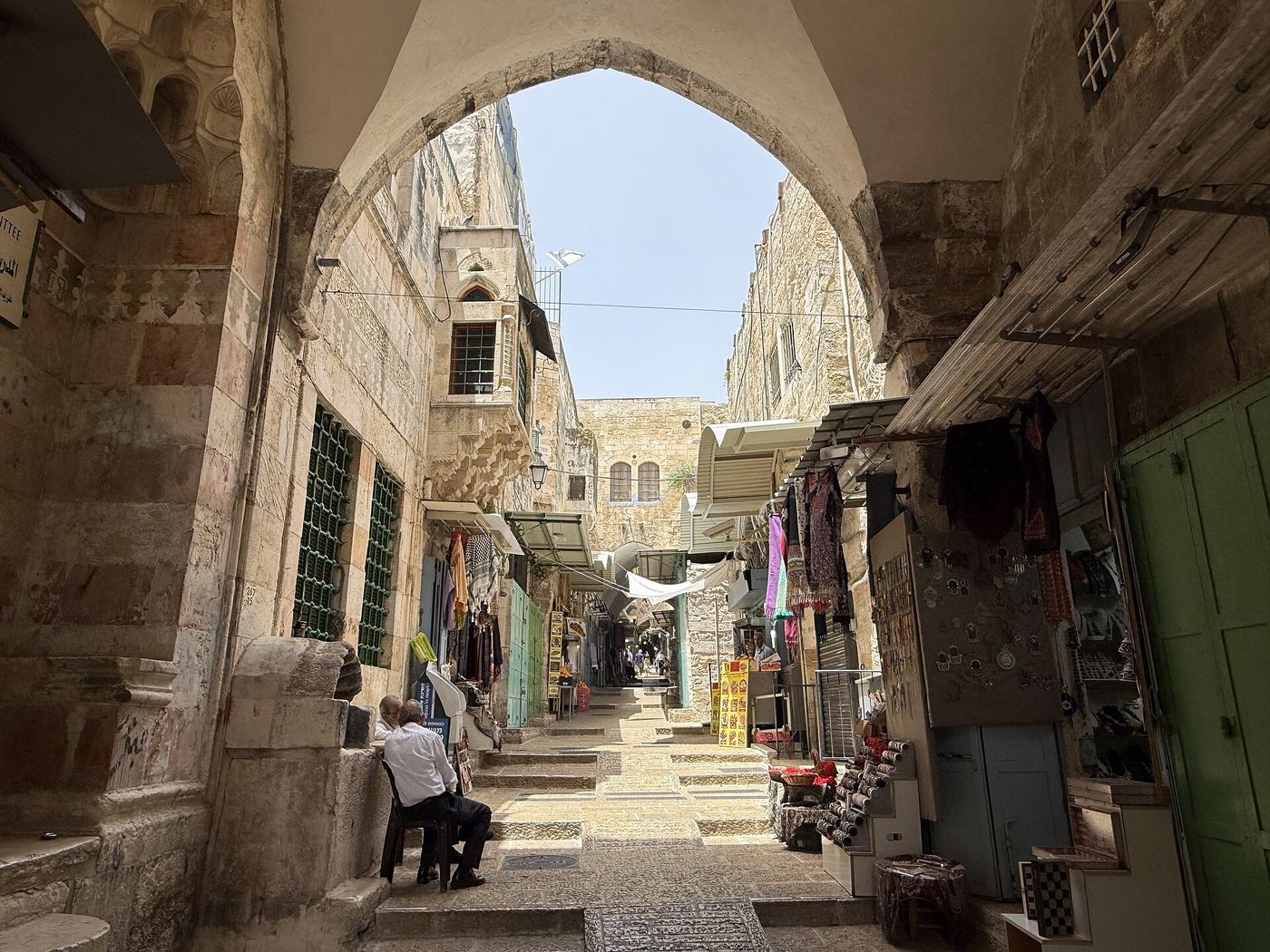
Inside Jaffa Gate, the Old City divides into four quarters, and on Saturday they behave differently. The Christian Quarter and the Armenian Quarter carry on as normal. The Armenian community has lived here since the 300s CE, and its quarter is a walled world of its own, quiet lanes around the Cathedral of St. James. The markets of the Muslim Quarter are open and busy, with spice shops, bakeries and stalls of everything. The Jewish Quarter and the Western Wall are quiet and prayerful. You can visit the Wall today, but no photographs on Shabbat. Wander as long as you like; Jaffa Gate is the easy way back out.
If you did not go on Thursday, this is the day. The Citadel at Jaffa Gate is open on Saturday and sells tickets at the door; opening hours to confirm. It tells the story of Jerusalem from its beginnings to the modern city, and its ramparts look over the whole Old City. It is a good first stop before a wander inside the walls.
The Israel Museum (35–40 minutes on foot each way)
The Israel Museum is open on Saturday, 10 am to 5 pm, with tickets at the door (about 59 shekels, about $17). It holds the Dead Sea Scrolls in the Shrine of the Book and a large model of Jerusalem as it looked before the Romans destroyed it in 70 CE. Seeing the model after a walk through the Old City makes the city make sense. The walk is 35–40 minutes each way, so take it only if you want the walk; a Gett taxi is the backup. There is also a quieter weekday option on Tuesday, by taxi.
The Mamilla promenade (10 minutes on foot)
The shortest outing: the wide stone promenade between the City Center and Jaffa Gate, flat the whole way. Walk it toward sunset at 4:45 pm and come back to the hotel as it gets dark.
Lunch and the evening
Most City Center restaurants are closed today, so lunch needs a plan: the Arthur may serve a Shabbat lunch or hold a cold plate for you, or lunch is at Bradley's if it is walkable to confirm. Shabbat ends at 5:23 pm. Within an hour the city reopens, and Bradley joins you for dinner.
The day, hour by hour
Sleep in. Breakfast at the hotel, served as usual.
Leave for the Old City: Jaffa Gate is 15–20 minutes on foot. The Tower of David museum first if you want it.
Lunch, by the Shabbat lunch plan to confirm.
Rest at the hotel. Or, if you want the walk, leave for the Israel Museum (35–40 minutes on foot; open until 5 pm).
If you went to the museum, start back now to be home before dark, or take a Gett taxi.
Sunset. A short walk on Mamilla if you stayed close.
Shabbat ends.
Dinner with Bradley.
Sunrise 6:00 am, sunset 4:45 pm. The city starts to reopen about an hour after sunset, so plan dinner for after 6 pm.
Bring and wear
Typical for mid-November in Jerusalem: high 66–68°F (19–20°C), low 50–52°F (10–11°C).
Grippy walking shoes for the Old City stone.
Shoulders and knees covered if you go into the Old City, and a scarf or shawl.
A light rain jacket and a layer for late afternoon.
A card for museum tickets, some shekels for the markets, and water.
Your phone, for Gett if a hill gets the better of you.
Before Shabbat begins on Friday
Saturday lunch settled with the hotel or Bradley.
Phone charged and Gett working.
Dinner time and place with Bradley for Saturday night.
A rough choice of outing, so the morning is simple.
Sunday, November 8 · Day 5 of 12 · With Bradley
The Old City, the Jewish Quarter and the Western Wall Tunnels
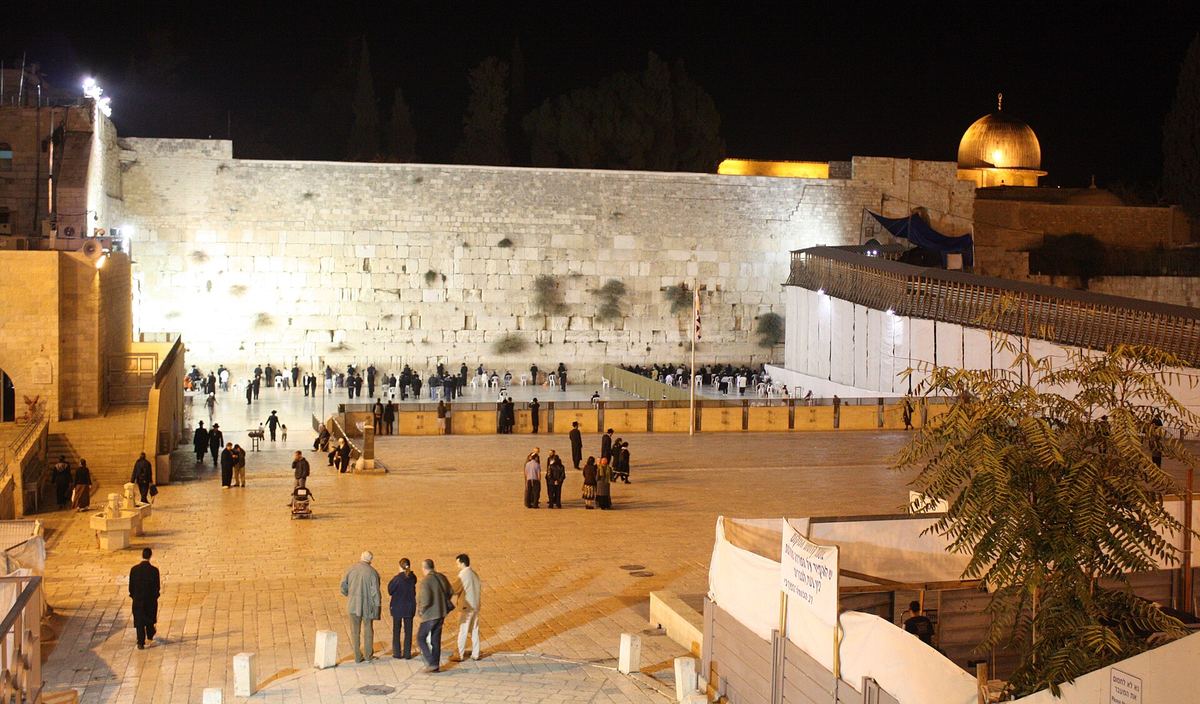
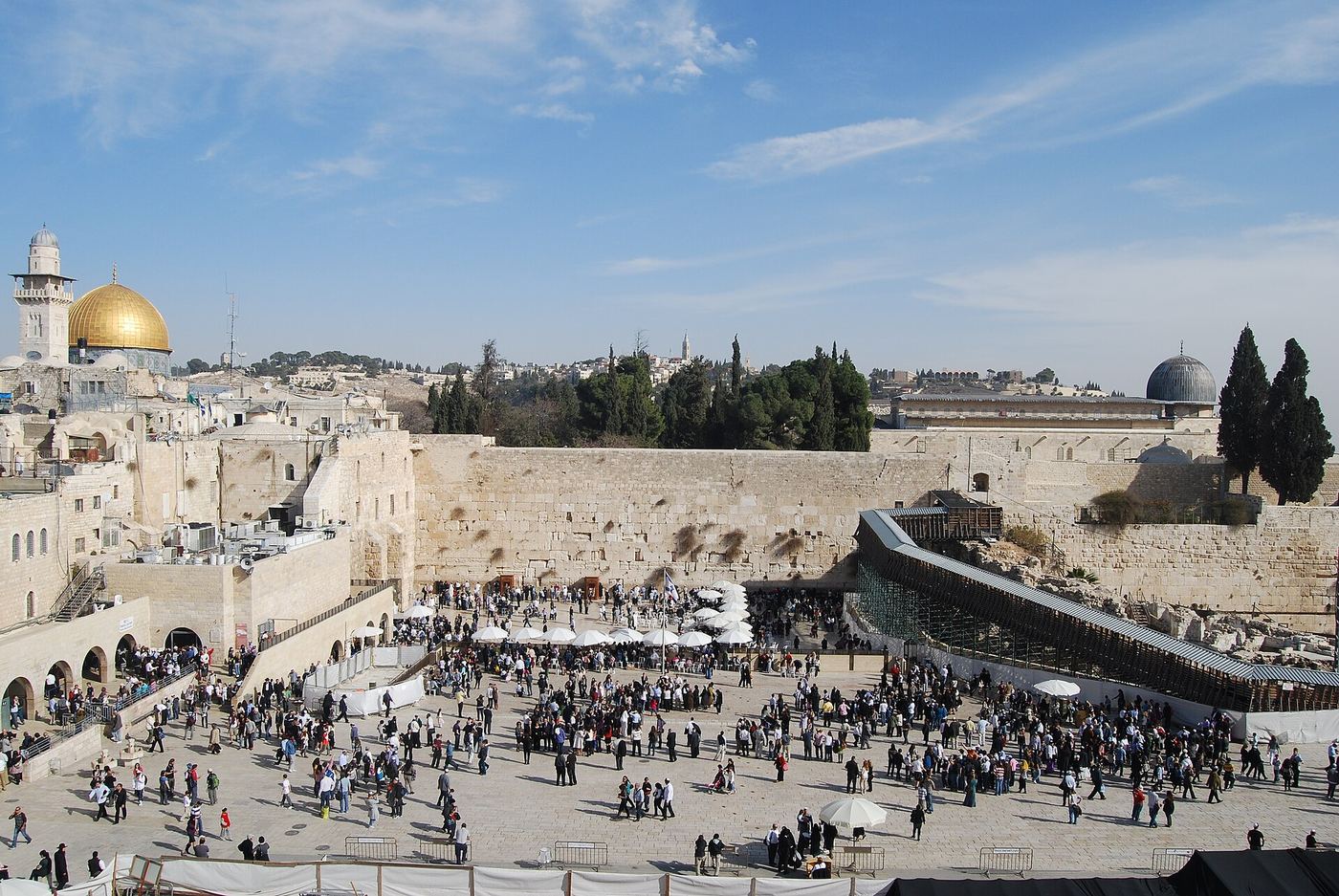
The Western Wall plaza from the Jewish Quarter, with the Dome of the Rock at top left and the wooden Mughrabi Bridge on the right. Photo: CyberCop, CC BY 3.0, via Wikimedia Commons
Rhythm
Medium-plus
Sunrise
6:01 am
Sunset
4:44 pm
Daylight
10h 43m
Weather, Jerusalem
High 66–68°F (19–20°C), low 50–52°F (10–11°C), rain on about 3 days in the month.Wear: Layers and a light rain jacket; the evenings are cool.Typical for mid-November
Medium-plus. About eight and a half hours out, door to door, with a long sit-down lunch in the middle. A guided walk in the morning, an easy stroll after lunch, and the tunnels at the end of the day.
The Western Wall is part of the retaining wall Herod built around 20 BCE when he enlarged the platform for the Second Temple. The Romans destroyed the Temple in 70 CE; the wall survived, and for centuries it has been the main place of Jewish prayer. Men and women pray in separate sections, and people tuck written notes into the cracks between the stones.
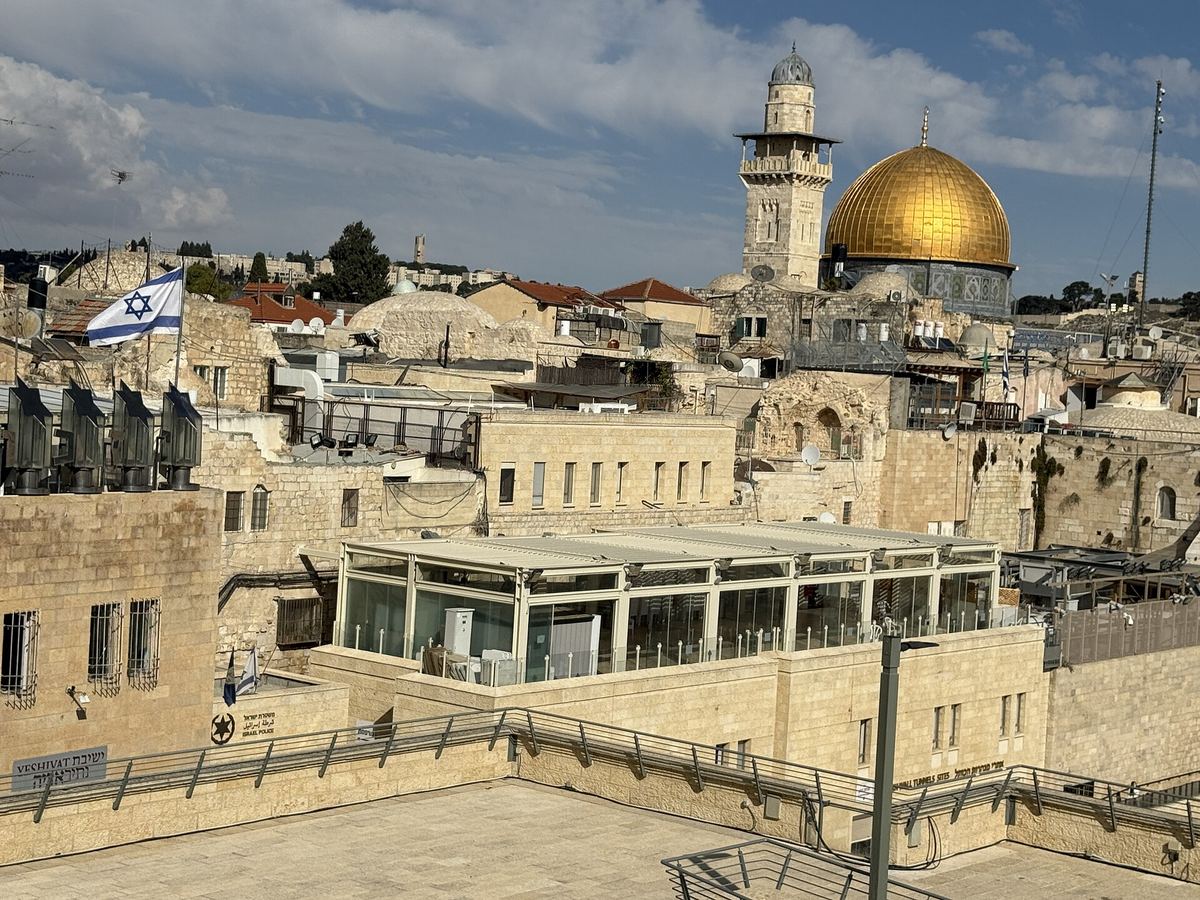
Above it sits the Temple Mount, where the First and Second Temples stood and where the Dome of the Rock has stood since around 691 CE. The tour tries to go up onto the platform, but the visit is not guaranteed; if it is closed, the guide takes you to a viewpoint over it instead. Either way you see the gold dome and understand how the two sites fit together.
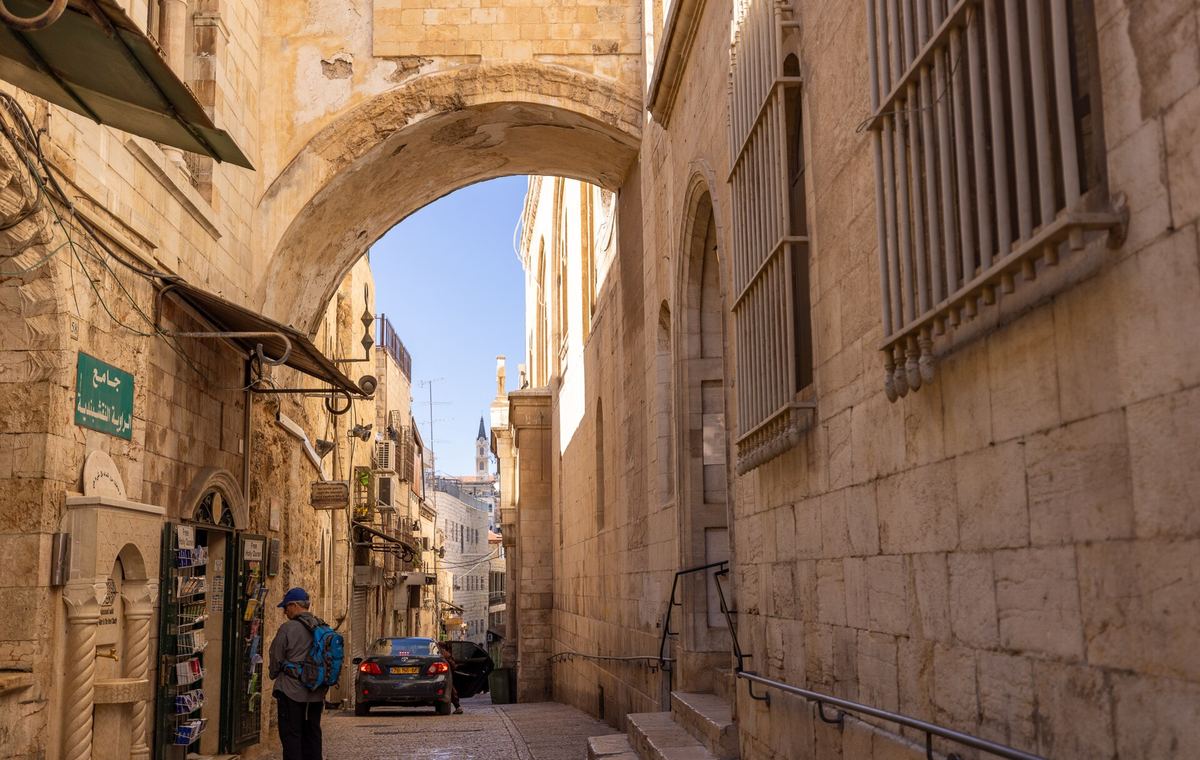
The Via Dolorosa is the route Christian tradition says Jesus walked carrying the cross. It runs through the Muslim Quarter, past shops and doorways, and is marked by fourteen Stations of the Cross; the last five are inside the Church of the Holy Sepulchre. It is a working street, crowded and narrow, so stay close to the group.
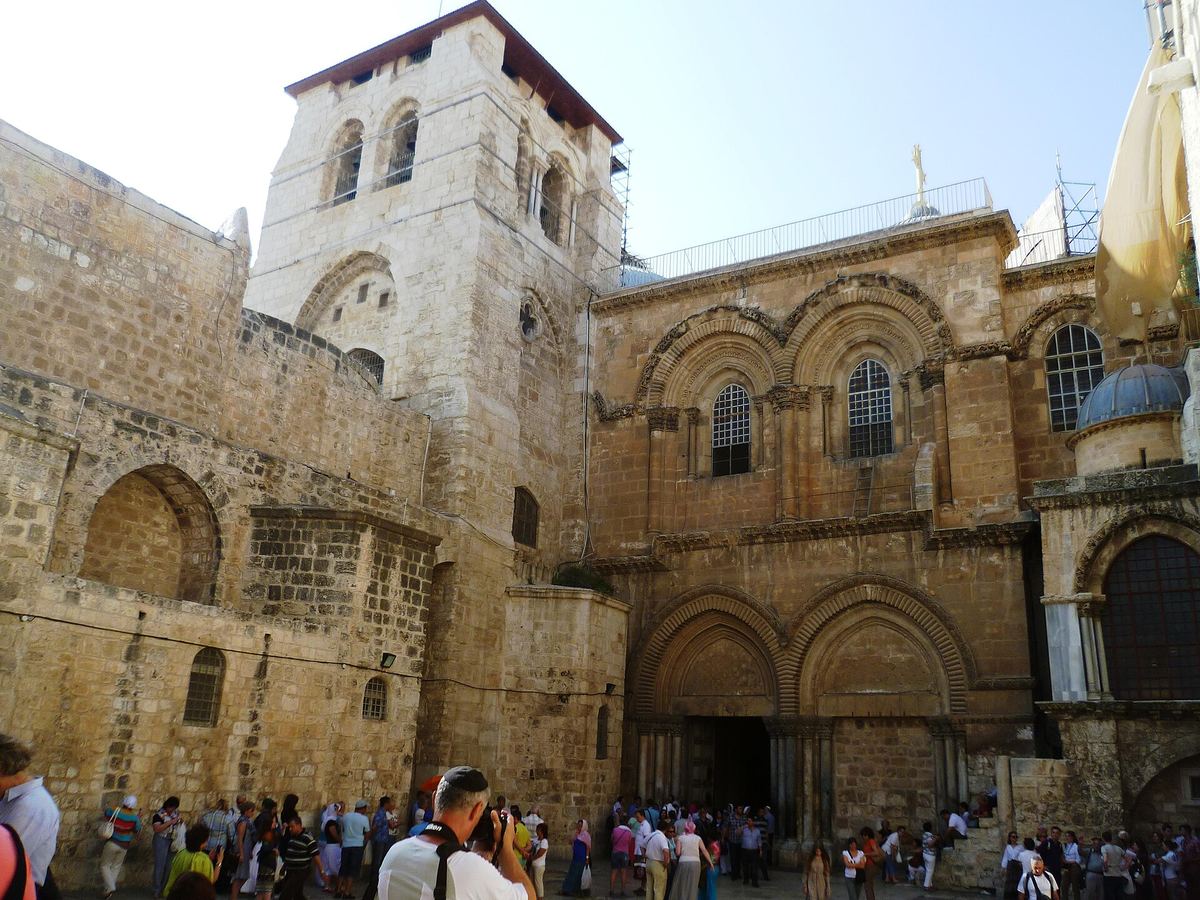
This church stands where Christian tradition places the crucifixion and the tomb of Jesus. The first church here was built by the emperor Constantine and dedicated in 335 CE; most of what you see today is the Crusader rebuilding of the 1100s. Several churches share it, Greek Orthodox, Roman Catholic and Armenian among them, and each guards its own corners. Inside it is dim, full of candles and pilgrims, and floored with very old, very smooth stone. Shoulders and knees must be covered.
Mount Zion: David's Tomb and the Last Supper room
Just outside the walls, one old building holds two traditions. On the ground floor is the room venerated as the tomb of King David; upstairs is a vaulted hall from the Crusader period that Christians honor as the room of the Last Supper. The tour ends back at Jaffa Gate about 2 pm.
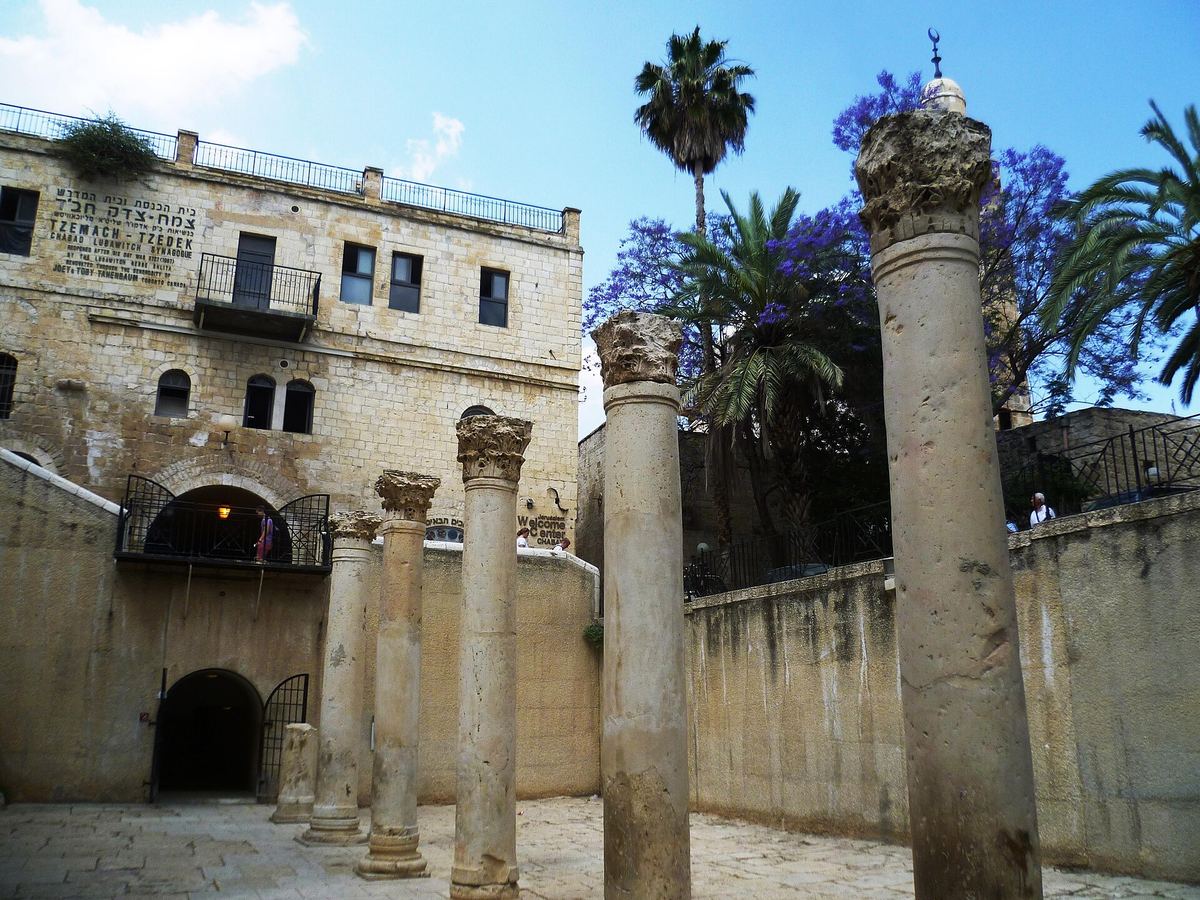
After the tour, sit down for a proper lunch with Bradley; this is the long break that makes the rest of the day easy. Then walk through the Jewish Quarter at your own pace. The Cardo was the main colonnaded street of Roman and Byzantine Jerusalem; the stretch you walk on was laid out in the 500s CE and excavated when the quarter was rebuilt after 1967. Part of it sits below today's street level, with the old columns standing beside modern shops.
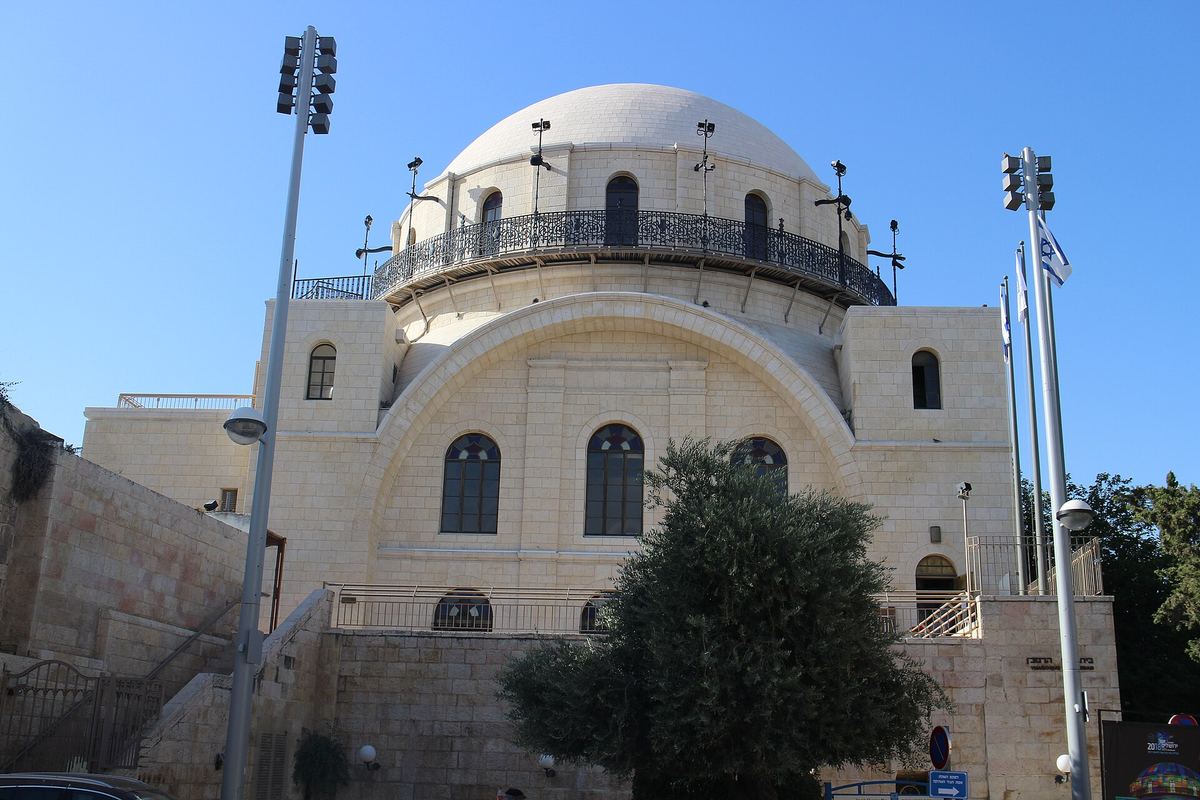
Hurva means "ruin," and the name has been earned more than once. The synagogue was built in the 1700s and destroyed, rebuilt in 1864, blown up in the fighting of 1948, and rebuilt again in 2010. Its white dome is a landmark of the quarter. Nearby, the rooftops give a wide view across the Old City to the Dome of the Rock and the Mount of Olives. From here it is a short walk down the steps to the Western Wall plaza.
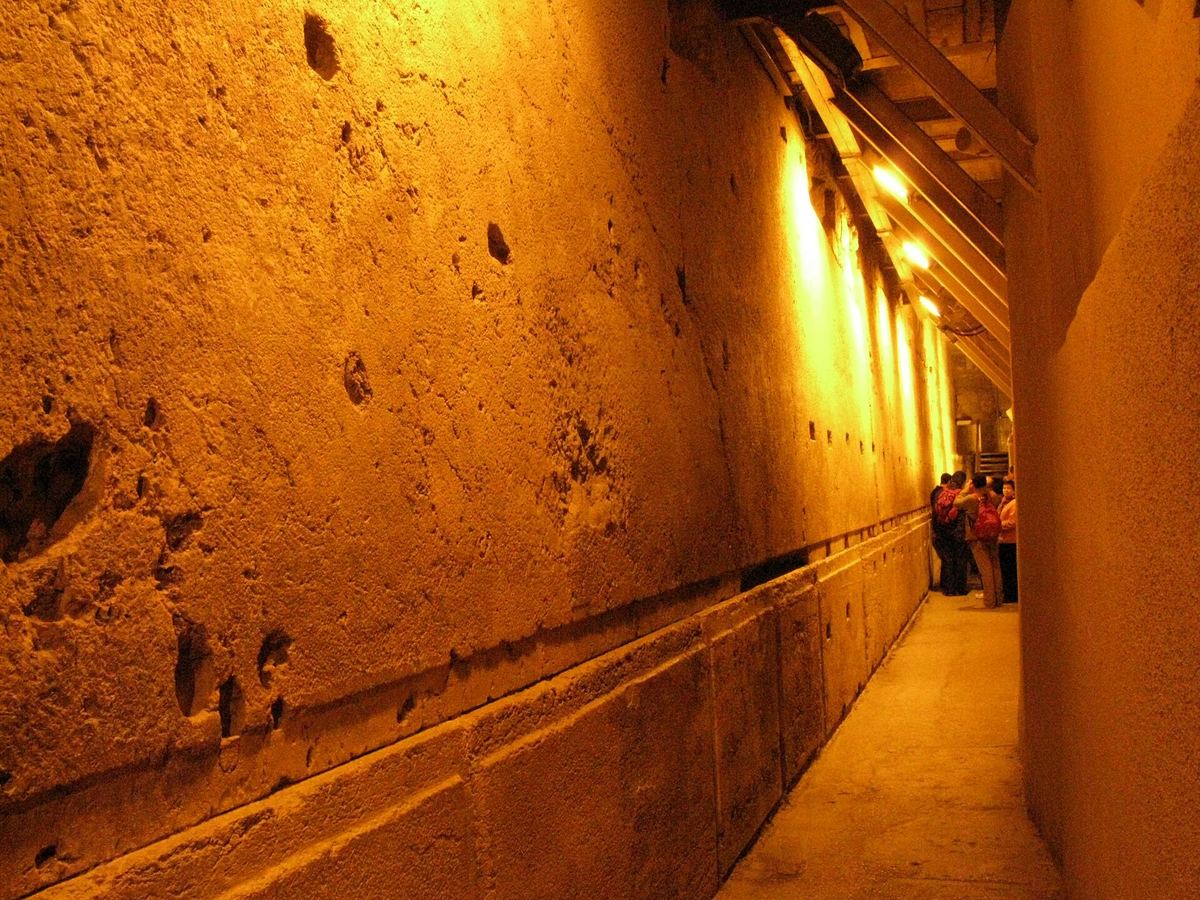
Only a short stretch of the Western Wall is open to the sky at the plaza; the rest continues north under buildings that were put up against it over the centuries. This guided walk follows that hidden length underground. You pass the point closest to where the Holy of Holies stood, a spot where many people stop to pray, and the Western Stone, a single block of Herodian masonry weighing hundreds of tons. It is cool and quiet below ground, mostly level, with some narrow stretches.
The tour ends after dark at the bottom of the Old City. Order a Gett taxi to Dung Gate while you are still inside, and let it carry you back up the hill.
The day, hour by hour
Wake. No alarm needed after Shabbat. Breakfast at the hotel.
Leave the hotel with Bradley. Jaffa Gate is 15–20 minutes on foot, along Jaffa Road and through Mamilla, or a 10-minute taxi.
Be outside Jaffa Gate, at the entrance to the Old City. Look for the Abraham Tours guide.
Holy City Tour starts: the Western Wall, the Temple Mount or its viewpoint, Via Dolorosa, the Holy Sepulchre, David's Tomb and the Last Supper room.
Tour ends at Jaffa Gate (about). Sit-down lunch with Bradley.
Easy stroll through the Jewish Quarter: the Cardo, the Hurva Synagogue, the rooftops.
Walk down to the Western Wall plaza. There is a security check at the entrance.
Be at the tunnels lobby, to the left of the Western Wall plaza, with the confirmation email open on your phone. Latecomers are not admitted.
Tunnel tour starts. Sunset is at 4:44 pm while you are underground.
Tour ends (about). Order a Gett taxi from Dung Gate before you come out.
Back at the Arthur (about 15 minutes by taxi). Dinner near the hotel and an early night.
The tunnel tour ends about 6:10 pm, well after the 4:44 pm sunset; it will be dark when you come out. Sunrise is 6:01 am, so the morning walk is in full daylight.
Bring and wear
Typical for mid-November in Jerusalem: a high of 66–68°F (19–20°C) and a low of 50–52°F (10–11°C). Warm by midday, cool by evening.
Grippy walking shoes. The Old City is polished stone all day, and some of it is slippery.
Modest dress: shoulders and knees covered, no bare shoulders, and a scarf or shawl for the churches and the Wall.
Passports, for the tour.
A warm layer for the evening and the tunnels, and a light rain jacket in case.
Your phone, charged, with the tunnels confirmation email saved, and Gett ready to use.
Water, and some shekels in small notes for the guide's tip (40–50 shekels per person is customary).
The night before
Saturday evening, after Shabbat ends at 5:23 pm: lay out passports, the scarf or shawl, and your grippy shoes.
Find the tunnels confirmation email (reservation 1166609) and save it on your phone where you can open it without signal.
Charge your phone and check that Gett opens and has your card.
Put 100 or so shekels in small notes in your bag for the guide's tip and a drink.
No alarm. Breakfast at your usual time is early enough.
High 74–76°F (24°C), low 58–60°F (15°C), the sea is about 72°F (22°C).Wear: Light layers and a sweater for the train home.Typical for mid-November
Easy and self-paced. No tour and nothing timed: a late-morning train, lunch in Jaffa, the sea, and the train home before dark. Bradley sets the pace.
The other Israel
Jerusalem's history runs back more than 3,000 years; Tel Aviv was founded in 1909 on sand dunes just north of Jaffa. It is flat, on the sea, warmer, louder and more relaxed, and it is a different country in an hour. Nothing is booked today. If Sunday was tiring, this can become a rest day instead, and Tel Aviv moves to Tuesday. A short version, Jaffa and lunch only, is just as good.
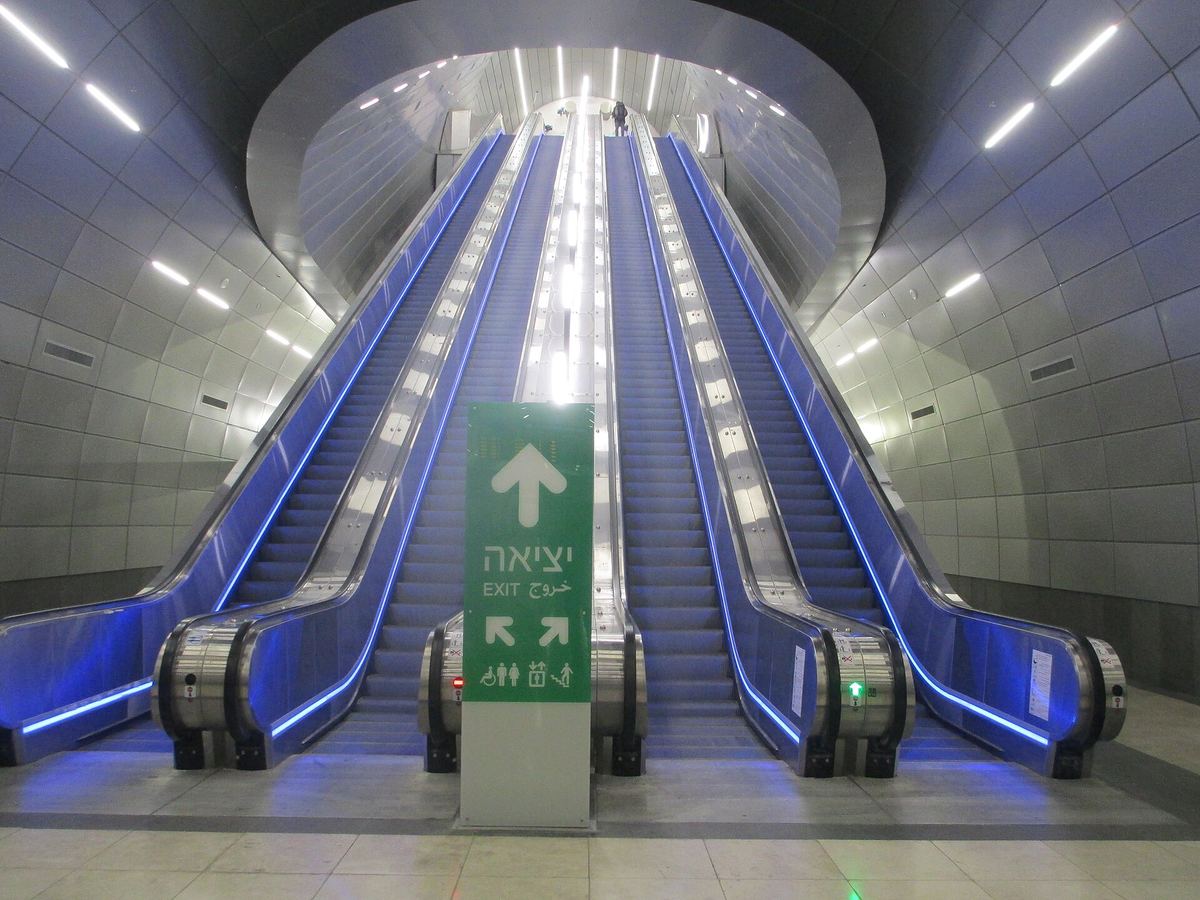
Jerusalem's Navon station is one of the deepest train stations in the world, with long escalators down to the platforms. It is four light-rail stops from the hotel along Jaffa Road, or a 15-minute taxi. Allow extra time for the security check at the entrance. The train to Tel Aviv takes about 35 minutes, running down through tunnels and over high bridges out of the hills. The day's train fare is about $20. The timetable and fares to confirm; Bradley checks them.
Old Jaffa and the port
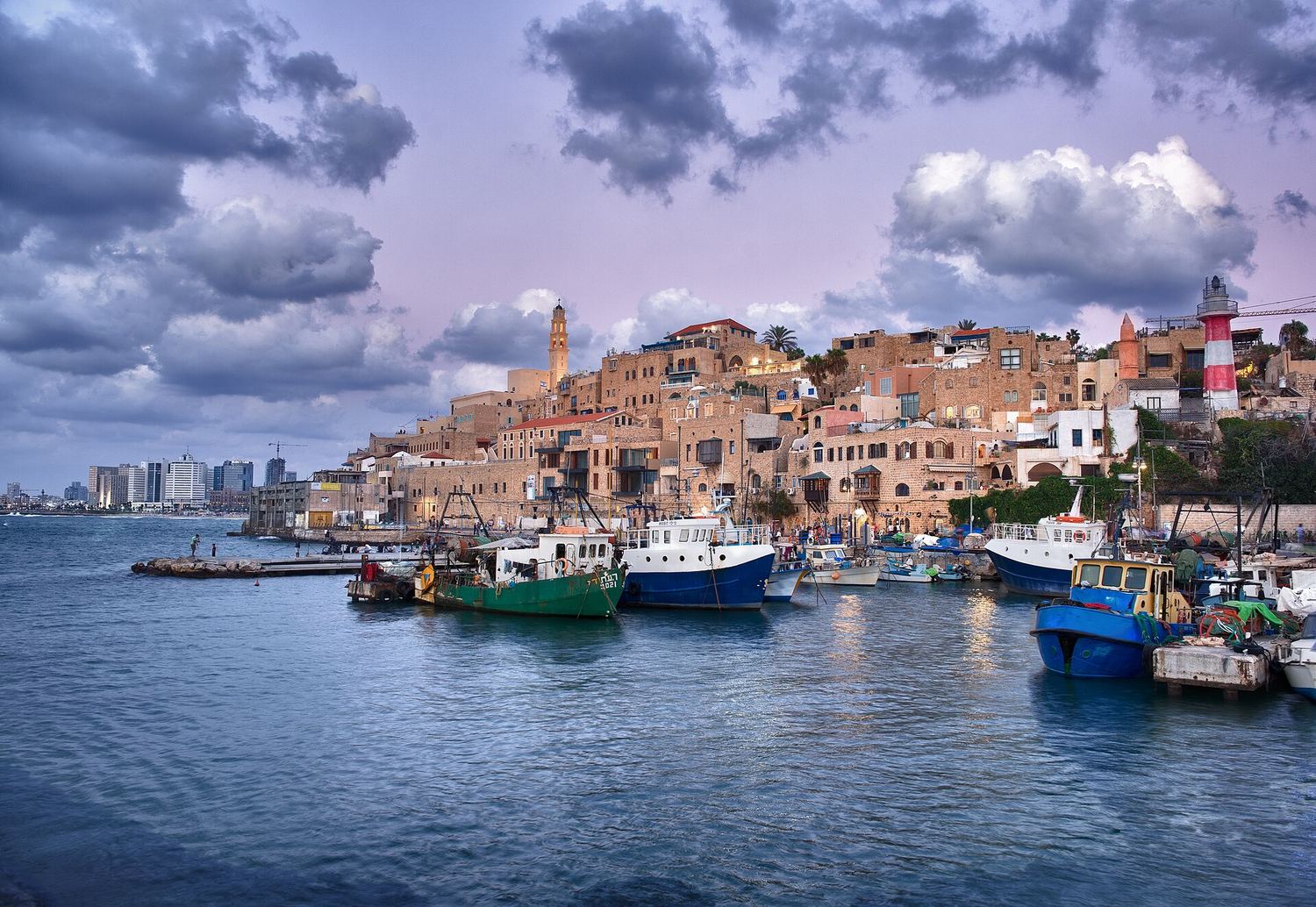
Jaffa is one of the oldest ports in the world. In the Bible, Jonah sails from here, and in the Book of Acts, Peter stays here at the house of Simon the Tanner. Napoleon took the town in 1799. The old town sits on a low hill over the harbor: restored stone lanes, artists' studios, the bell tower of St. Peter's Church at the top, and a view north along the beach to the towers of Tel Aviv. Down below, the old port has fishing boats and places to eat. This is where to have lunch.
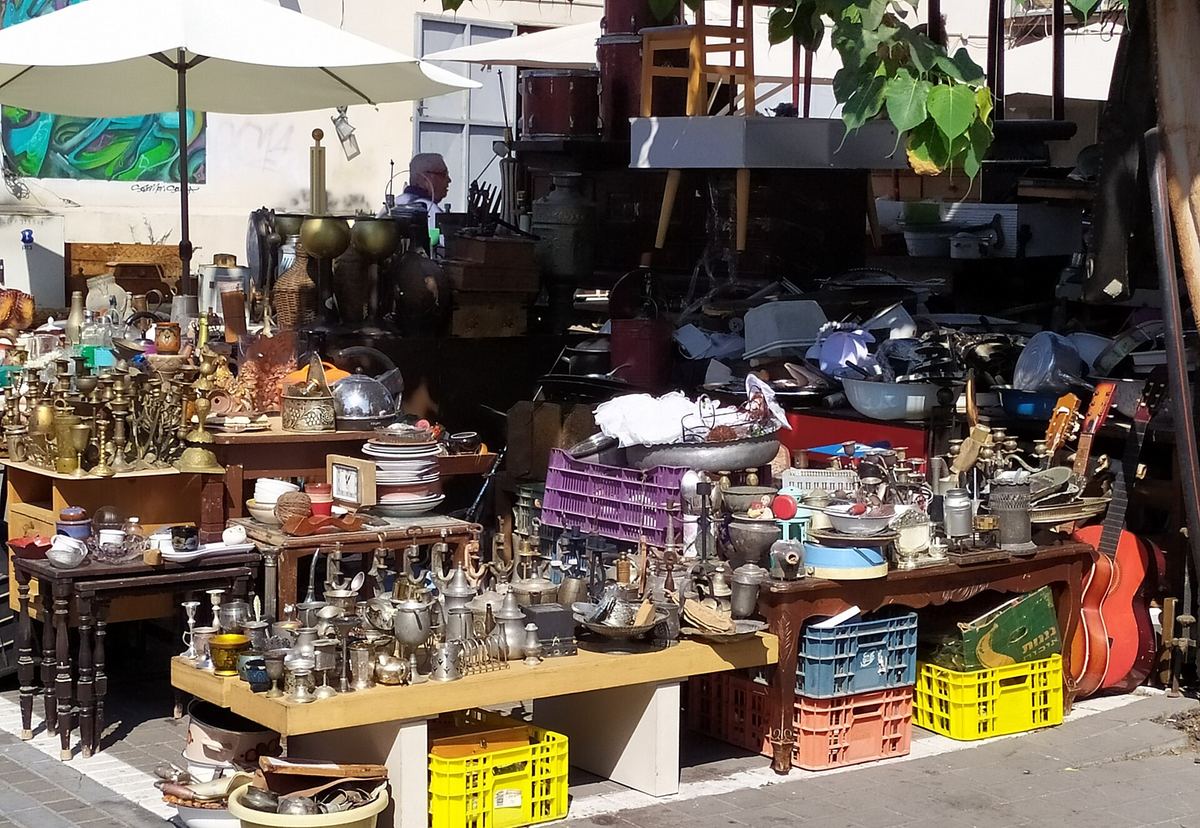
A few minutes' walk from the clock tower, the flea market fills several streets with furniture, old brass and silver, rugs, clothes and plain junk, with cafes and small restaurants in between. You do not need to buy anything to enjoy it; it is the best people-watching in the city. Prices at stalls are open to bargaining.
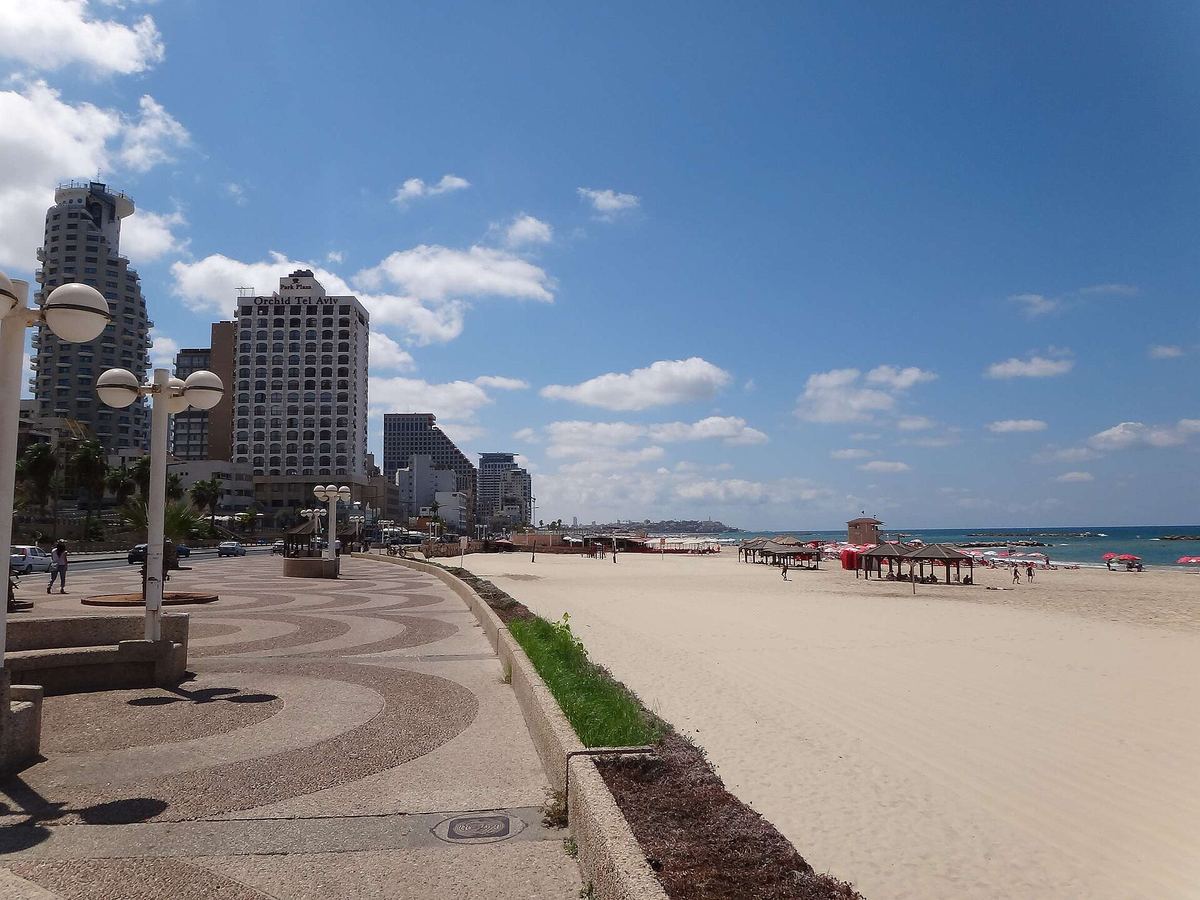
A paved promenade runs along the beach from Jaffa north into Tel Aviv, flat and wide, with benches the whole way. In mid-November the sea is still about 72°F (22°C) and some locals swim all month. Walk as far as feels good, or sit with a coffee and watch the water.
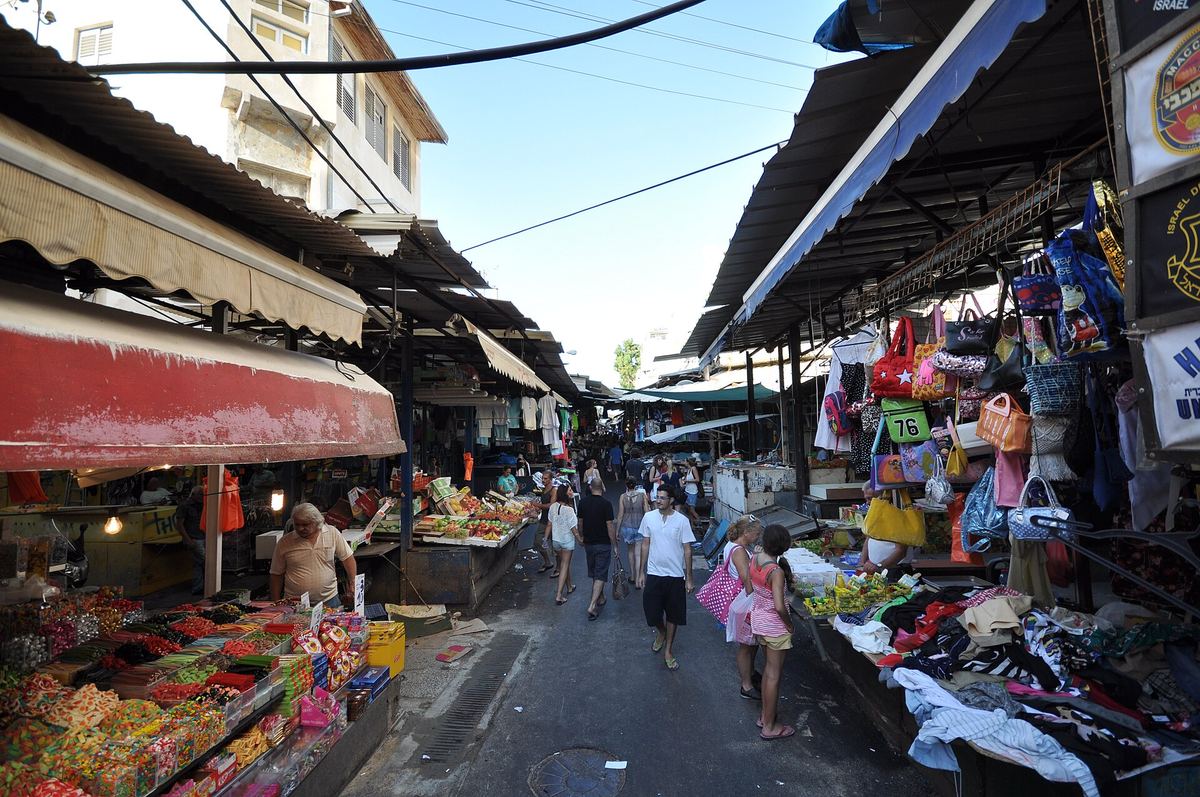
Tel Aviv's big street market runs inland from the sea near the Yemenite Quarter: fruit, spices, cheap clothes and street food. It is louder and scruffier than Machane Yehuda. Go only if you still feel fresh; it is not worth tiring yourself out before the train home.
The day, hour by hour
Wake. Breakfast at the hotel.
Leave the hotel with Bradley: light rail 4 stops to Navon station, or a 15-minute taxi.
Through station security and down to the platform.
Train to Tel Aviv, about 35 minutes (exact times to confirm).
Arrive in Tel Aviv (about), then on to Jaffa with Bradley. Walk the old town on its hill.
Lunch in Old Jaffa or by the port.
The flea market.
The sea front. Carmel Market if there is energy.
Head for the station (about). Train home to confirm.
Sunset in Tel Aviv.
Back in Jerusalem (about). Dinner near the hotel.
Sunset in Tel Aviv is 4:45 pm. Aim to be on the train home around then, so you are not walking unfamiliar streets in the dark. All times today are flexible.
Bring and wear
Typical for mid-November in Tel Aviv: high 74–76°F (24°C), low 58–60°F (15°C). Warmer than Jerusalem, so dress lighter and carry a layer for the evening back in the hills, where it drops to 50–52°F (10–11°C).
Comfortable shoes with some grip; Jaffa's lanes are old stone and have steps.
A hat, sunglasses and sunscreen for the sea front.
Water.
A card, plus shekels in small notes for the flea market and stalls.
Your passport, kept with you as ID.
The night before
Bradley checks the train times both ways and the fares.
Decide with Bradley: full day, Jaffa and lunch only, or a rest day with Tel Aviv on Tuesday.
Phone charged; Gett ready.
Some shekels in small notes in your bag.
Tuesday, November 10 · Day 7 of 12 · Bradley if he is free
High 66–68°F (19–20°C), low 50–52°F (10–11°C), rain on about 3 days in the month.Wear: Layers and a light rain jacket; the evenings are cool.Typical for mid-November
Easy. Sleep in, one short afternoon outing by taxi or none, and an early night.
Why today is empty
After the Old City on Sunday and Tel Aviv on Monday, today is the reserve. Wednesday is an open day with Bradley and Thursday is the long Dead Sea day, so this one stays quiet. If you feel like an outing in the afternoon, choose one of the two below. If not, stay in, read, and enjoy the wine hour.
Option one: the Israel Museum
Israel's national museum is a 15-minute taxi ride from the hotel; tickets are sold at the door, about 59 shekels (about $17); today's opening hours to confirm. It is large, so do two things and skip the rest without guilt. Have lunch in the museum cafe.
The Shrine of the Book
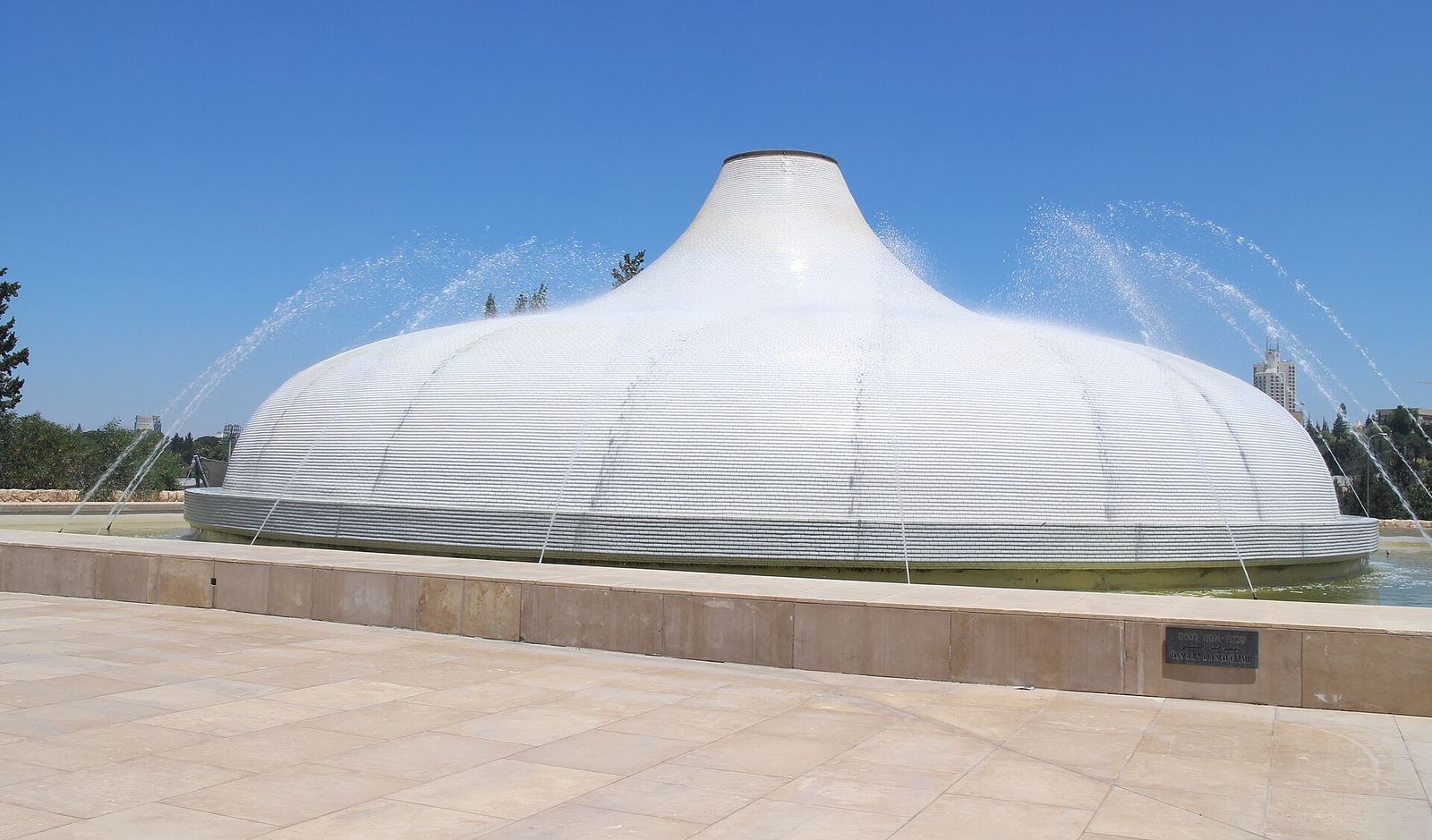
In 1947 a shepherd found clay jars holding ancient scrolls in a cave at Qumran, above the Dead Sea. More caves and more scrolls followed: the Dead Sea Scrolls, written around 2,000 years ago, including the oldest known copies of books of the Hebrew Bible. The Shrine of the Book was built to hold them and opened in 1965. Its white dome is shaped like the lid of one of those jars, and it faces a black basalt wall, a reference to the scrolls' own theme of the sons of light against the sons of darkness. Inside, a full copy of the great Isaiah scroll is wrapped around a central drum, with original scroll fragments in the cases around it.
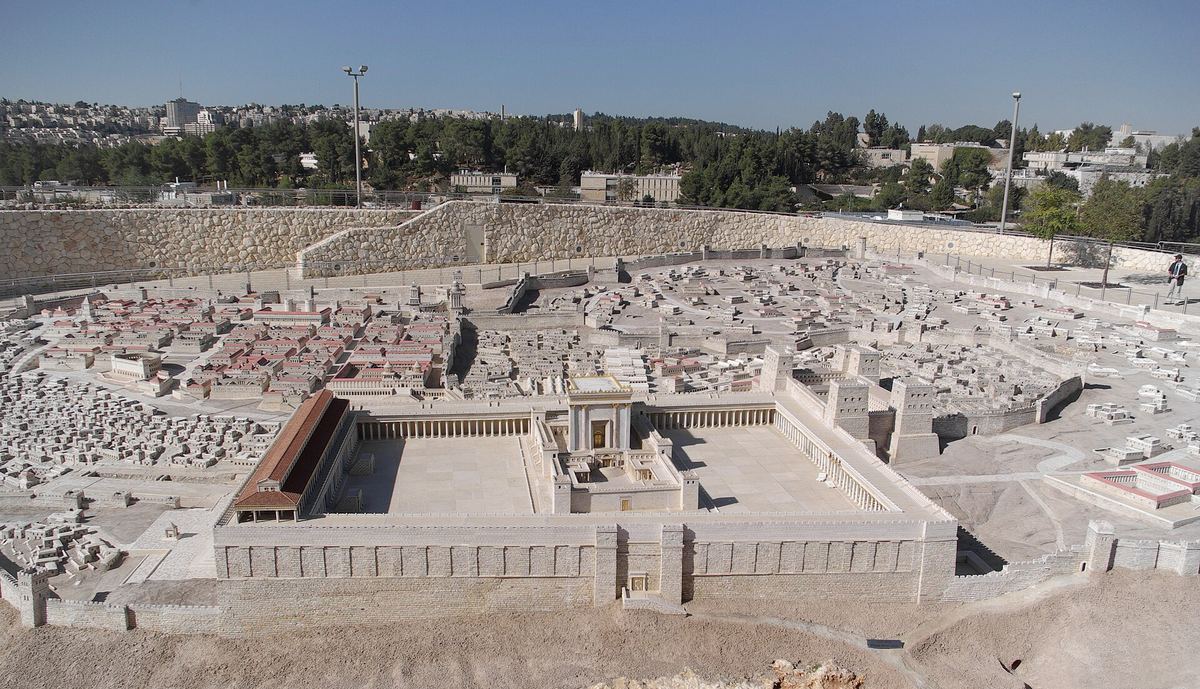
Next to the Shrine is a room-sized outdoor model of Jerusalem as it was around 66 CE, just before the Romans destroyed it in 70 CE, built at a scale of 1 to 50. You look down on Herod's Temple and its platform, the palaces, the walls and the city's streets. After Sunday in the Old City, this is where it all clicks into place: you can find the Western Wall you stood at, and see what stood above it.
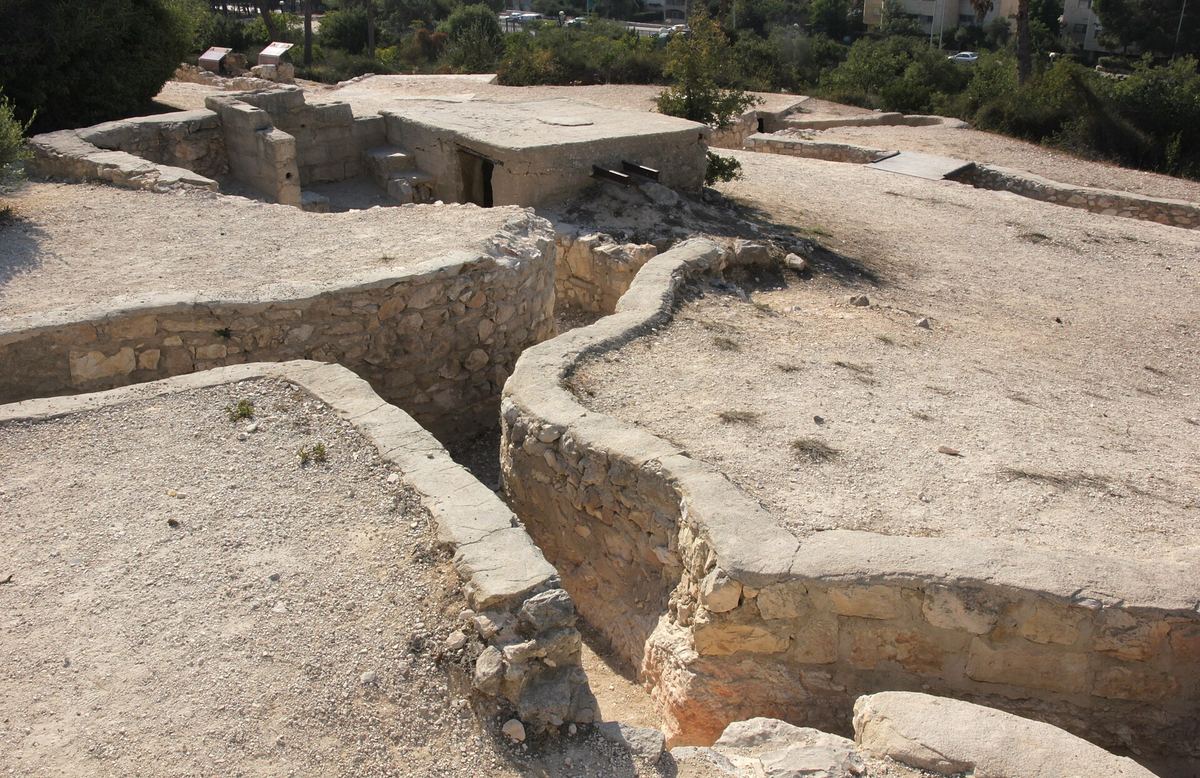
Ammunition Hill was a fortified Jordanian position in northern Jerusalem. On June 6, 1967, in the Six-Day War, Israeli paratroopers took it in one of the hardest battles of the war, and dozens of men on both sides were killed. A day later Israeli forces reached the Old City and the Western Wall. The trenches and bunkers are preserved, and a small museum tells the story. The grounds are free and the museum charges a modest fee; it is open Sunday to Thursday, 9 am to 5 pm. It is 15 minutes by taxi from the hotel. If you call ahead (+972 2-582-9393), they can arrange a tour with a veteran.
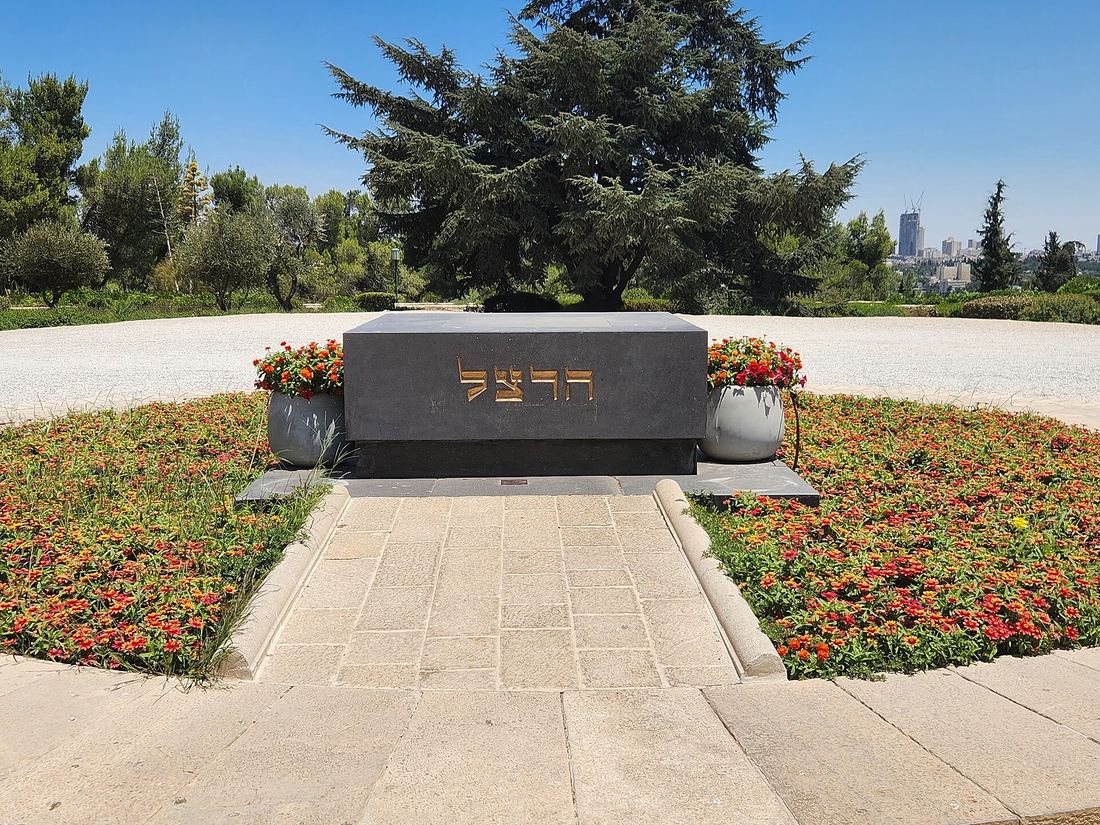
About 10 minutes on by taxi, Mount Herzl is Israel's national cemetery. Theodor Herzl, who founded the Zionist movement, was reburied at the summit in 1949. Prime ministers Golda Meir and Yitzhak Rabin are buried here, and the military cemetery on the slope holds the graves of soldiers from every war since 1948. It is free, quiet and green, with paths and benches. It explains modern Israel more plainly than any lecture.
The day, hour by hour
Sleep in. Late breakfast at the hotel.
Optional: taxi to the Israel Museum (15 minutes), lunch in the cafe, then the Shrine of the Book and the model. Or taxi to Ammunition Hill (15 minutes), then Mount Herzl (about 10 minutes on).
Taxi back to the hotel. Rest.
Sunset.
Ask the front desk for Thursday's packed breakfast, to collect on Wednesday evening.
Dinner near the hotel.
Talk through Wednesday's choice with Bradley: Latrun, the City of David, the Tower of David, or nothing.
Bed.
Sunrise 6:03 am, sunset 4:43 pm. Be back at the hotel before dark, and keep the evening short.
Bring and wear
Typical for mid-November in Jerusalem: high 66–68°F (19–20°C), low 50–52°F (10–11°C).
Comfortable shoes. Ammunition Hill's trenches and Mount Herzl's paths have steps and slopes.
A light rain jacket and a layer.
A card for tickets and lunch; Gett on your phone for the taxis.
Modest dress is respectful at Mount Herzl.
Tonight, for Wednesday
Nothing to prepare: Wednesday has no booking and no alarm.
If you want Latrun and the Ayalon Institute, Bradley calls Ayalon today to book the hour-long tour: +972 8-940-6552. The City of David tour is booked online a few days ahead.
Grippy shoes, a hat and a layer ready by the door for whichever outing you pick.
Wednesday, November 11 · Day 8 of 12 · With Bradley
High 66–68°F (19–20°C), low 50–52°F (10–11°C), rain on about 3 days in the month.Wear: Layers and a light rain jacket; the evenings are cool.Typical for mid-November
Easy to medium. Nothing is booked. Pick one outing from the list below, or keep the whole day free, and be home for an early night before Thursday's 7:45 am pickup.
How the day works
The coast tour that was planned for today was canceled because it ran about thirteen hours. Instead, this is a day to spend with Bradley at a normal pace: a late breakfast, one outing by taxi, a sit-down lunch, and back at the hotel by late afternoon. Thursday is the last long day, so do not fill this one.
Wednesday: pick one, or none
The 1948 day: Latrun and the Ayalon Institute. Latrun's Yad La-Shiryon is the armored corps memorial, with more than 150 tanks on the ridge that guarded the road to Jerusalem in 1948. Half an hour away in Rehovot, the Ayalon Institute is a bullet factory that ran for three years under a kibbutz laundry, hidden from the British; the guided tour takes an hour. The two sites are about 40 minutes from Jerusalem and 30 minutes apart, so the day is 6 to 7 hours door to door by taxi or with Bradley driving. Latrun is 30 shekels (about $9), open Sunday to Thursday 8:30 am to 4:30 pm; the English guide is +972 8-630-7400. Ayalon is 27 shekels (about $8) and must be booked ahead by phone: +972 8-940-6552. The best fit for the war-history thread of the trip.
City of David, then the Israel Museum. The City of David is the hill just south of the Old City walls where the oldest Jerusalem stood, with working excavations; take the guided tour and choose the dry Canaanite tunnel route, not the wading tunnel. Site and tour run about 40 to 75 shekels (about $11 to 21), booked a few days ahead at cityofdavid.org.il; there are stairs and slopes, so take it slowly. After lunch, a 15-minute taxi to the Israel Museum for the Dead Sea Scrolls and the model of Second Temple Jerusalem, about 59 shekels (about $17), tickets at the door. If you choose this, Tuesday stays a pure rest day.
Tower of David and the night show. The citadel museum at Jaffa Gate, 15 to 20 minutes on foot, tells the whole story of the city in about 90 minutes, and after dark its walls become the screen for a sound-and-light show of about 45 minutes. The show is 59 to 69 shekels (about $17 to 20), booked online; dress warm. The gentlest option, and the only one that ends after sunset.
Nothing at all. A long breakfast, the Mamilla promenade, lunch near the hotel, an afternoon nap. After Sunday and Monday, this is a perfectly good choice.
The day, hour by hour
Wake without an alarm. Breakfast at the hotel.
Bradley arrives. Decide on the outing over coffee, or decide on none.
Leave by Gett taxi if you are going out. Latrun is about 40 minutes; the City of David about 10 minutes; Jaffa Gate 15 to 20 minutes on foot.
A sit-down lunch, wherever the morning ends.
Back at the hotel. Rest.
Sunset.
Pick up Thursday's packed breakfast from the front desk. Dinner near the hotel.
Lay out passports, the copy of the entry permit, swimsuit, water shoes and towel for the Dead Sea. Set two alarms for 6:15 am.
Sunrise 6:04 am, sunset 4:42 pm. Any outing fits between them; only the Tower of David show runs after dark, and it is a 15-minute walk from the hotel.
Bring and wear
Typical for mid-November in Jerusalem: a high of 66–68°F (19–20°C) and a low of 50–52°F (10–11°C). Layers, and a light rain jacket.
Grippy walking shoes: Latrun's ridge, the City of David's steps and the Old City's stone are all uneven.
A hat, sunglasses and water for Latrun, which is mostly outdoors.
Passports if you go to Latrun or the Ayalon Institute.
A card and some shekels for entry fees and lunch.
Tonight, for Thursday
Collect the packed breakfast from the front desk.
Lay out passports and the printed copy of the entry permit; the pickup is 7:45 am outside the entrance of the David Citadel Hotel, King David St 7, and you should be there by 7:30 am.
Pack the Dead Sea bag: swimsuit, water shoes, towel, hat, sunscreen, a change of clothes, and 167 shekels each in cash or a card for the entry fees.
No shaving in the morning; the salt water finds every nick.
Save reservation TI09388375 and the Tourist Israel emergency number, +972 3-600-9555, on your phone.
Thursday, November 12 · Day 9 of 12 · With Bradley
High 79–82°F (26–28°C), low 62–64°F (17°C), dry, with strong sun even in November.Wear: Light clothes, a hat, sunscreen and water.Typical for mid-November
Big. About 10 hours, starting at a gentler 7:45 am. A cable car up a desert fortress, a short oasis walk, and a float in the Dead Sea. The last big day, with Friday and Saturday to recover.
Down to the lowest place on earth
From Jerusalem the road drops off the back of the hills into the Judean Desert, bare tan slopes falling toward the Dead Sea. The shore is about 1,400 feet (430 meters) below sea level, the lowest land on earth, and it is much warmer and drier than the city you left an hour before. Tourist Israel picks you up at 7:45 am at the same place as yesterday and brings you back about 5:30 pm. Entry fees are paid on site, 167 shekels each.
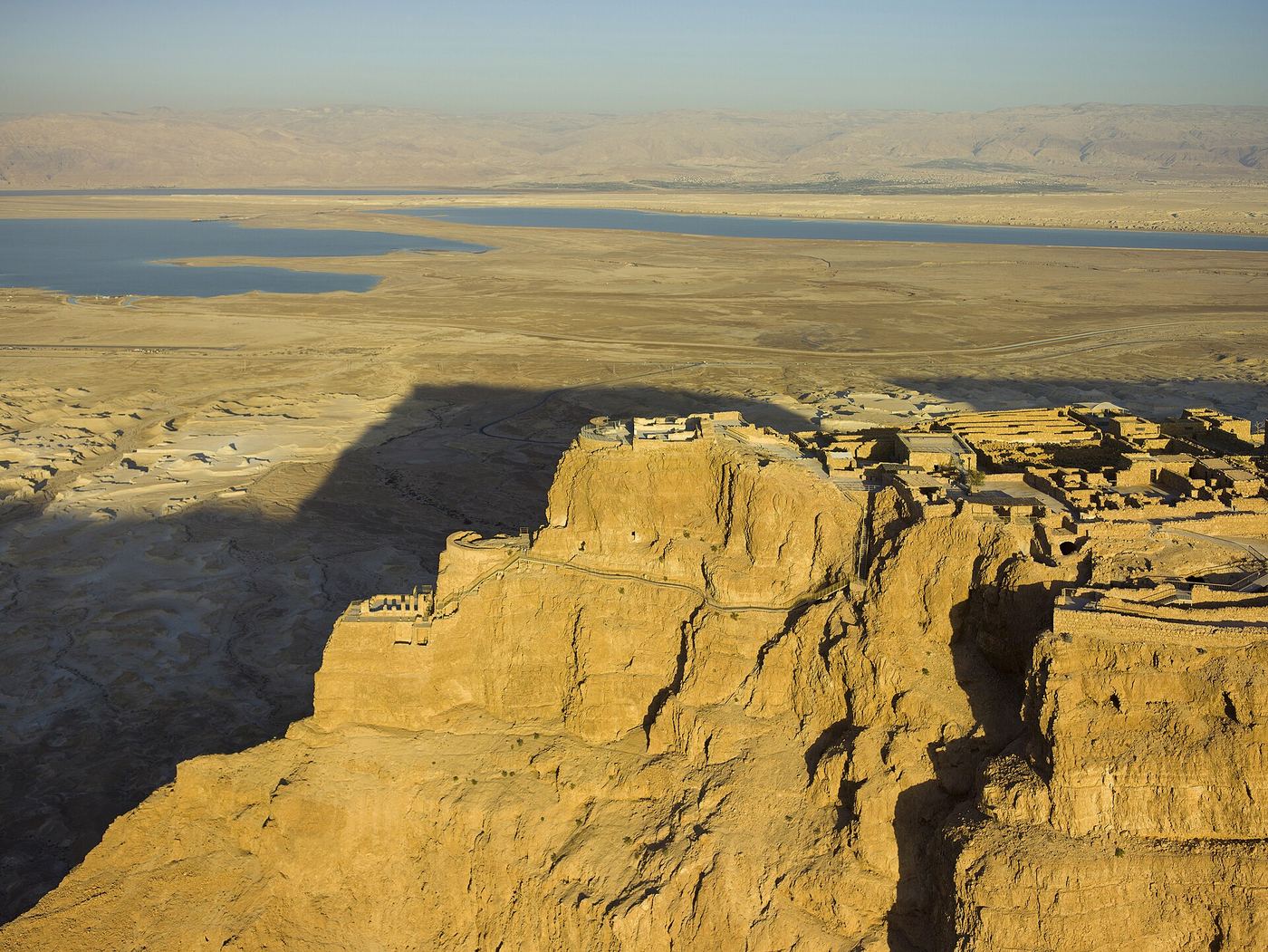
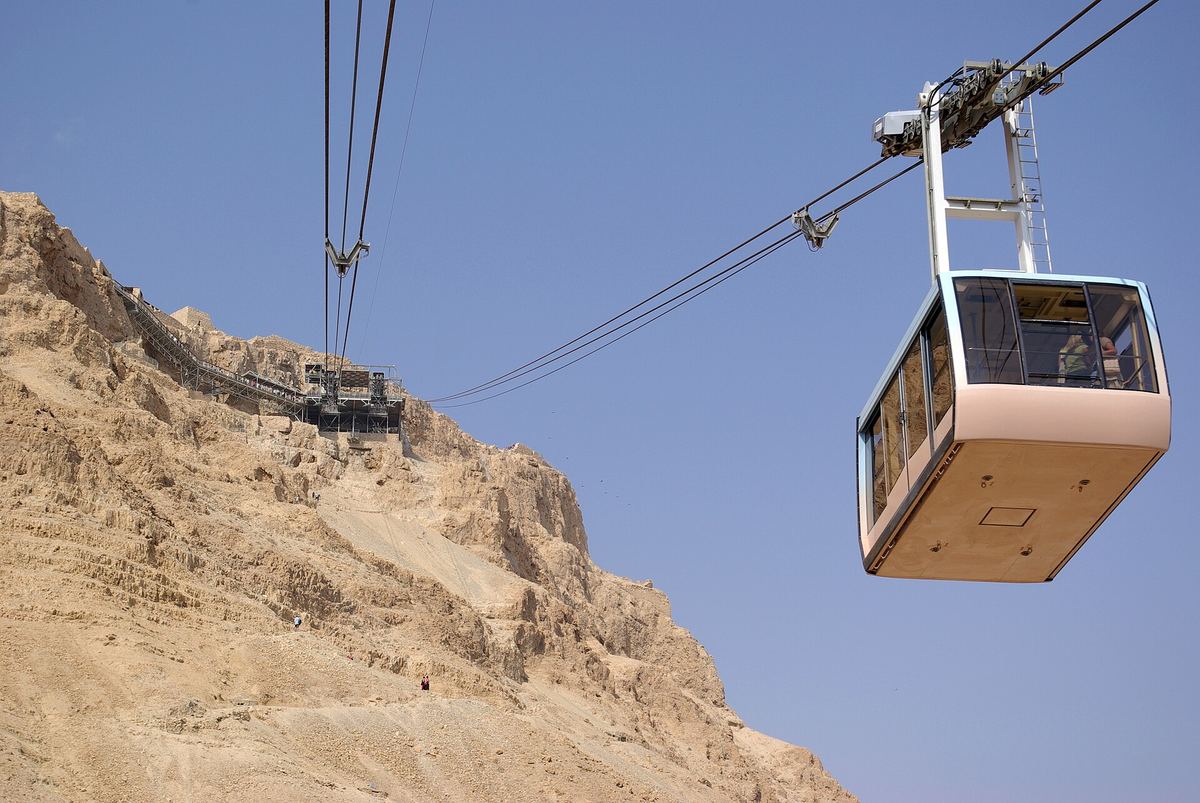
Masada is a flat-topped mountain where Herod built a palace-fortress around 30 BCE. In 73 CE it was the last Jewish stronghold against Rome, and the story of its defenders made it a symbol of the modern state; Israeli soldiers once took their oath here. The cable car takes six minutes; the summit is level and the views over the Dead Sea are the point. With the guide you see Herod's storerooms and bathhouse, the cisterns cut into the rock, the remains of a synagogue, and his Northern Palace stepping down the cliff on three terraces. On the west side, the earth ramp the Roman army built to break in is still there, and the outlines of their camps are visible on the desert floor below.
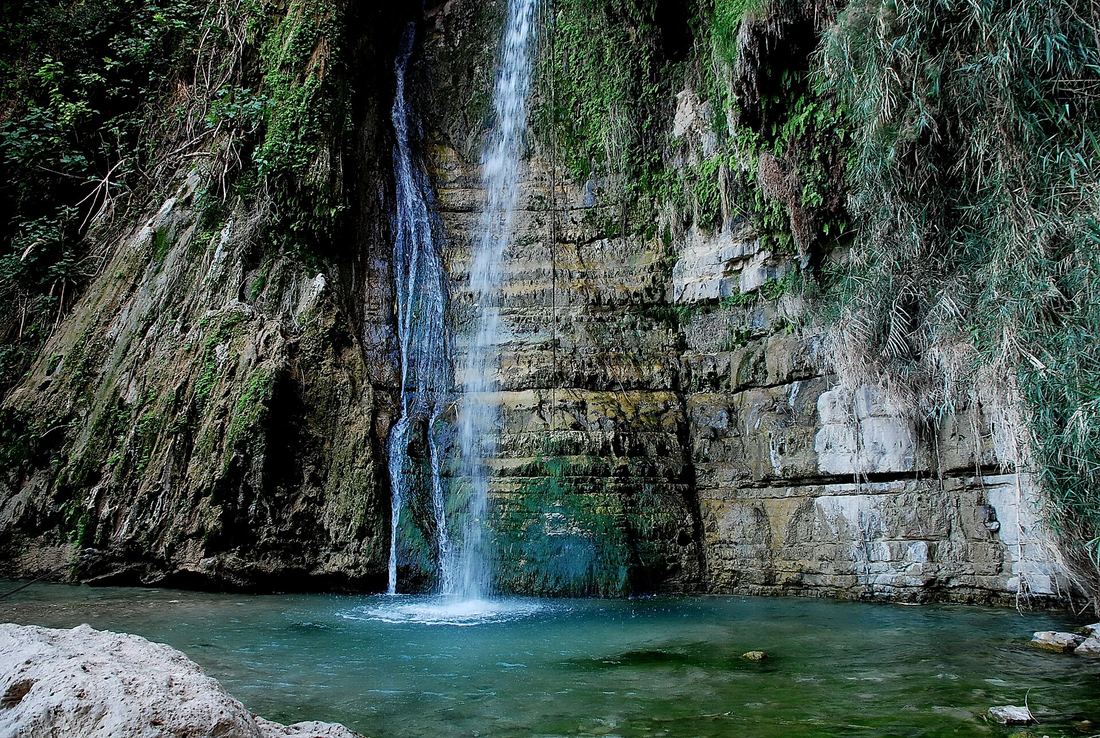
Ein Gedi is a spring-fed oasis in the cliffs above the Dead Sea, green and shaded in the middle of the desert. In the Bible, David hid here from King Saul. The trail follows a stream past pools and small waterfalls, and you will likely see ibex, wild goats with curved horns, and rock hyraxes sunning themselves. Go as far as feels good; the first waterfall is enough. The path has steps and some uneven rock, so take Bradley's arm where you need it.
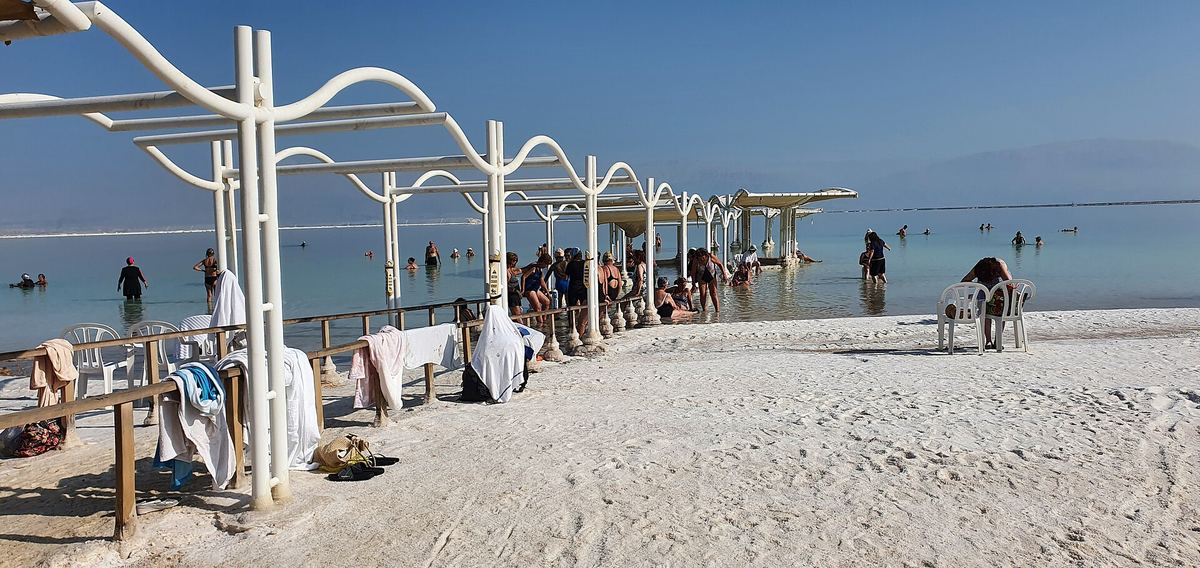
The Dead Sea is about ten times saltier than the ocean, so dense that you float without trying. Walk in carefully in water shoes, since salt crystals on the bottom are sharp, then sit back and lift your feet: you will lie on the water as if in a chair. Float on your back, keep the water away from your eyes and mouth, do not splash, and rinse off in the showers afterward. The black mud from the shore is spread on the skin, left to dry and washed off. Ten or fifteen minutes in the water is plenty. This is why you skipped shaving this morning: the salt finds every nick.
The day, hour by hour
Wake. Packed breakfast from the hotel. No shaving this morning.
Leave the hotel with Bradley. The David Citadel Hotel, King David St 7, is 12 minutes on foot or an 8-minute taxi.
Be outside the entrance of the David Citadel Hotel, on King David Street.
Pickup. Down through the Judean Desert.
Masada: the cable car up with the guide, the palace and the summit.
Ein Gedi: the oasis walk, as far as the first waterfall or wherever feels right.
The Dead Sea beach: float, mud, shower. Where lunch fits in to confirm with the guide; bring snacks.
Sunset at the Dead Sea. The drive back up is in the dark.
Back in Jerusalem (about). Rinse off, an easy dinner near the hotel.
Sunrise at the Dead Sea is 6:03 am and sunset 4:42 pm, so you ride home after dark. Stop times are set by the guide on the day. The sun is strong at the Dead Sea even in November; drink water at every stop.
Bring and wear
Typical for mid-November at the Dead Sea and Masada: high 79–82°F (26–28°C), low 62–64°F (17°C), dry, with strong sun even in November. Jerusalem in the morning is cooler, 50–52°F (10–11°C) at dawn, so wear a layer you can pack away.
Passports and a printed copy of the ETA-IL entry permit.
Swimsuit (wear it under your clothes), water shoes and a towel.
A hat, sunglasses, sunscreen, and plenty of water.
Grippy shoes for Masada and Ein Gedi.
A plastic bag for the wet swimsuit, and a change of clothes.
A card and shekels for the entry fees, 167 shekels each, plus 40–50 shekels for the guide's tip.
The night before
Collect Thursday's packed breakfast from the front desk on Wednesday evening.
Pack the bag: swimsuit, water shoes, towel, hat, sunscreen, water, a plastic bag, a change of clothes.
Passports and the printed ETA-IL permit with the bag.
Pickup written down: 7:45 am, David Citadel Hotel, King David St 7; be there by 7:30 am.
Alarm for 6:15 am. Bed early.
Friday, November 13 · Day 10 of 12 · With Bradley in the morning
An easy morning, then the last Shabbat
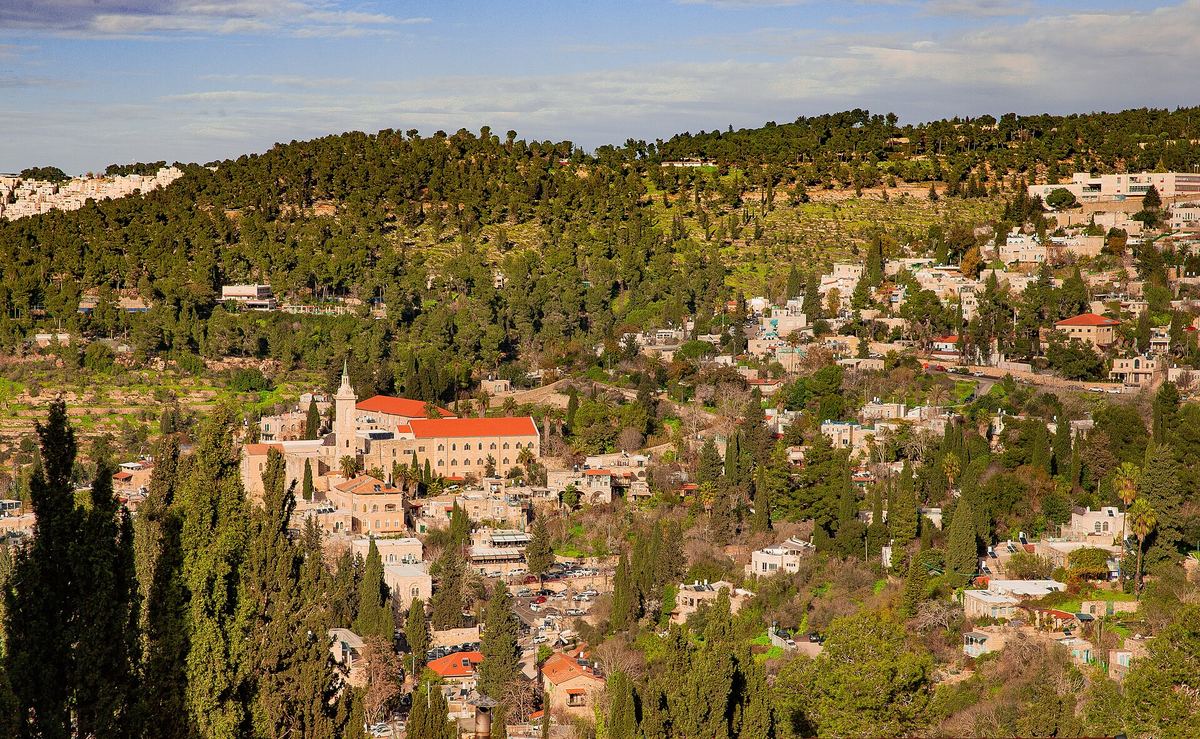
Ein Kerem's wooded hillside, with the bell tower and red roofs of the Church of St. John the Baptist left of center. Photo: Tombah, CC0, via Wikimedia Commons
Rhythm
Easy
Sunrise
6:05 am
Sunset
4:41 pm
Daylight
10h 36m
Weather, Jerusalem
High 66–68°F (19–20°C), low 50–52°F (10–11°C), rain on about 3 days in the month.Wear: Layers and a light rain jacket; the evenings are cool.Typical for mid-November
Easy. A late breakfast, at most one short outing with Bradley, an afternoon of rest and packing, and Shabbat from 4:00 pm.
After two big days
You have just done the two longest days of the trip back to back. This morning is for recovering. Have a late breakfast. If you feel like going out, there is one short outing below; if not, do nothing at all, which is a perfectly good plan. It is also your last Friday, so if there is something you want to buy at Machane Yehuda before the stalls close at about 2 pm, this is the morning to go.
Ein Kerem
Ein Kerem is an old village in the green hills on the southwest edge of Jerusalem, 20–25 minutes by taxi from the hotel. Christian tradition holds that John the Baptist was born here, and two churches mark the story: the Church of St. John the Baptist in the village, and the Church of the Visitation up the hillside, where Mary is said to have visited his mother, Elizabeth. Below them is Mary's Spring, the village well. Today the stone houses hold artists' studios, galleries and courtyard cafes under the trees. Have lunch in one of the courtyards with Bradley and be back at the hotel by 2 pm. The lanes are steep in places, so stay on the flatter streets near the center if your legs are tired from Thursday.
Afternoon: rest and start packing
Bradley heads home before candle lighting. Use the quiet afternoon to rest and begin packing for Sunday, so Saturday can be a true day off. Shops and transit close between about 2 and 4 pm.
If you loved last Friday at the Western Wall, go back. The route is the same: leave the hotel at 3:30 pm, about 30 minutes downhill through Jaffa Gate. Candles are lit at 4:00 pm and the sun sets at 4:41 pm. Come back on foot, 30 minutes uphill in the dark, or by Gett taxi. If you would rather stay in, an early night is just as good.
Shabbat dinner
Dinner is the same choice as last week, arranged at the same time: Bradley's home if it is walkable, or a hosted Shabbat dinner reached on foot (Shabbat of a Lifetime or similar, about $70–95). Which one, and the time: to confirm.
The day, hour by hour
Wake slowly.
Late breakfast at the hotel.
Optional: Gett taxi with Bradley to Ein Kerem, 20–25 minutes.
Walk the village: the Church of St. John, Mary's Spring, the galleries.
Courtyard cafe lunch.
Taxi back to the hotel. Back by 2 pm.
Rest. Start packing.
Optional: leave for the Kotel, about 30 minutes on foot, downhill.
Candle lighting. Shabbat begins.
Sunset.
Walk back up or take a Gett taxi.
Shabbat dinner to confirm.
Friday afternoon winds down before the 4:41 pm sunset, and candle lighting is earlier than last week, at 4:00 pm. Sunrise is 6:05 am.
Bring and wear
Typical for mid-November in Jerusalem: high 66–68°F (19–20°C), low 50–52°F (10–11°C).
Comfortable, grippy shoes for Ein Kerem's sloping lanes.
Shoulders and knees covered for the churches and the Wall, and a scarf or shawl.
A warm layer and a light rain jacket for the evening.
A card for the taxi and lunch.
The night before
Decide with Bradley: Ein Kerem, or a quiet morning.
Shabbat dinner and Saturday lunch both settled.
Rinse and dry the Dead Sea swimsuit and shoes so they are ready to pack.
Phone charged; Gett ready.
Saturday, November 14 · Day 11 of 12 · On your own by day, Bradley in the evening
High 66–68°F (19–20°C), low 50–52°F (10–11°C), rain on about 3 days in the month.Wear: Layers and a light rain jacket; the evenings are cool.Typical for mid-November
Easy. A true rest day on foot before the travel day, with a farewell dinner with Bradley after Shabbat ends at 5:18 pm.
A day with nothing to do
The city is quiet again, as it was last Saturday: no buses or light rail, most City Center shops and restaurants closed, breakfast at the hotel as usual. Everything below is on foot and needs nothing booked. Gett works today if you need a ride.
The hotel terrace
Take a book and a coffee and sit. After eleven days you know the street sounds, the light and the neighbors. This is the time to write a postcard, look through your photos, or just watch Jerusalem rest.
A last Old City wander (15–20 minutes on foot)
The walls you walk through at Jaffa Gate were built by the Ottoman sultan Suleiman the Magnificent between 1537 and 1541, on older foundations, and they still circle the whole Old City. Go back to whatever you liked best. The Christian and Armenian quarters and the Muslim Quarter markets are open on Saturday; the Jewish Quarter and the Wall are quiet, with no photographs on Shabbat. Jaffa Gate is the easy way in and out. The wide gap in the wall beside the gate, where cars now drive through, was cut in 1898 so that the German emperor, Kaiser Wilhelm II, could ride into the city in his carriage.
Something to take home
If you want a present or a keepsake, the Old City markets are open today. Look for the painted Armenian ceramics of the Armenian Quarter: tiles, bowls and plates in blue, green and white, a craft Armenian families have practiced in Jerusalem for about a century. In the Muslim Quarter markets you will find olive wood, spices, embroidered cloth and scarves. Prices at stalls are open to bargaining; a smile and a counteroffer are expected. Most stalls take cash, so carry some shekels.
The flat, wide walk from the City Center to Jaffa Gate. It is the shortest outing of the day and good for a last look at the walls in the late afternoon. Sunset is at 4:40 pm.
Lunch, dinner and packing
Lunch follows the Shabbat plan, at the hotel or at Bradley's if it is walkable to confirm. Shabbat ends at 5:18 pm, and the city reopens within about an hour. Have a farewell dinner with Bradley, then finish packing.
The day, hour by hour
Sleep in. Breakfast at the hotel.
The hotel terrace, with a book.
Optional: walk to Jaffa Gate (15–20 minutes) for a last wander in the Old City.
Lunch, by the Shabbat lunch plan to confirm.
Rest. Pack everything you will not need tonight or tomorrow morning.
Optional: the Mamilla promenade, 10 minutes on foot, before sunset.
Sunset.
Shabbat ends.
Farewell dinner with Bradley.
Finish packing. Lay out passport, phone charger and clothes for the flight.
Sunrise 6:06 am, sunset 4:40 pm. Shabbat ends at 5:18 pm; plan dinner for after 6 pm, once restaurants reopen.
Bring and wear
Typical for mid-November in Jerusalem: high 66–68°F (19–20°C), low 50–52°F (10–11°C).
Grippy shoes for the Old City.
Shoulders and knees covered for the Old City, and a scarf or shawl.
A layer for the late afternoon, and a light rain jacket.
Some shekels for anything you buy in the markets.
Before Shabbat begins on Friday
Saturday lunch settled with the hotel or Bradley.
Farewell dinner time and place set with Bradley.
Athens flight time known, and the taxi or Bradley's ride for Sunday arranged.
Ask the hotel about checkout time and holding your bags on Sunday to confirm.
Sunday, November 15 · Day 12 of 12 · Bradley if he can
High 66–68°F (19–20°C), low 50–52°F (10–11°C), rain on about 3 days in the month.Wear: Layers and a light rain jacket; the evenings are cool.Typical for mid-November
Medium. A travel day: breakfast, checkout, the ride down to Ben Gurion, and three hours at the airport. The shape of the day depends on the flight time to confirm.
Your last morning
Have a proper breakfast at the Arthur and a last walk down the lane if there is time. Sunday is the first day of the working week in Israel, so the city is busy again and the roads to the airport carry weekday traffic. Your bags should already be packed from last night. Checkout time and whether the hotel can hold your bags if the flight is late in the day: to confirm.
Getting to Ben Gurion
There are two ways down. A taxi from the hotel corner takes 45–60 minutes and goes door to door with your bags; this is the simpler choice with luggage. The train from Navon station takes about 25 minutes to the airport, but you first need the light rail (4 stops) or a 15-minute taxi to Navon, and the security check and long escalators at the station. Bradley comes with you if he can.
By taxi, the road runs back the way you came on the first day: down out of the hills past the old armored vehicles at the roadside, onto the coastal plain, and across to the airport outside Tel Aviv. It is a good last look at the country, and at how small it is: the whole drive is under an hour.
At the airport
The airport was built by the British in the 1930s as Lydda Airport and was renamed in 1973 for David Ben-Gurion, Israel's first prime minister, after his death. Departure security is thorough: before you check in, an agent may ask where you stayed, who you visited and whether you packed your bags yourself. Answer simply and plainly; it is routine. Then check-in, passport control and the gate. Allow the full 3 hours. Airline, flight number and terminal: to confirm.
Athens
The flight to Athens ends your time in Israel. Greece uses euros, so spend your last shekels at the airport or keep a few as a souvenir. Departure time to confirm. Once it is known, fill in the times below by working back from it.
The day, hour by hour
Wake. Breakfast at the hotel. (Earlier if the flight is in the morning.)
Final packing check: passport, phone, charger, medication, the small entry card from passport control.
Leave the hotel by taxi. Taxi to Ben Gurion, 45–60 minutes. Or the train from Navon, about 25 minutes, after the light rail or a taxi to the station.
At the airport. Security questions, check-in, passport control.
At the gate.
Departure for Athens to confirm.
Work back from the flight: at the airport 3 hours before, leave the hotel 4 hours before by taxi. Sunrise 6:07 am, sunset 4:40 pm.
Bring and wear
Typical for mid-November in Jerusalem: high 66–68°F (19–20°C), low 50–52°F (10–11°C). Wear layers for the plane.
Passport, the small entry card from arrival, and the flight confirmation on your phone.
Medication and a change of clothes in your carry-on.
A card for the taxi.
Phone charged, with Gett ready to call the taxi.
The night before
Flight time confirmed, and the hotel departure time written down: 4 hours before the flight.
Taxi plan settled: Gett, the hotel's front desk, or Bradley.
Bags packed and closed, except for what you need in the morning.
Passport and entry card in your carry-on.
Checkout time and bag storage to confirm with the front desk.
Say goodbye to the staff at the Arthur, and leave a tip if you wish.
High 64–66°F (18–19°C), low 52–54°F (11–12°C), some rain possible to confirm.Wear: Layers, a light rain jacket, and grippy shoes for the marble.Typical for mid-November
Medium. Two small-group walks back to back, both with Alternative Athens: the Acropolis from 8:00 to 10:00 am, then eating your way through the center from 10:30 am to 2:00 pm. The afternoon is free.
The Acropolis
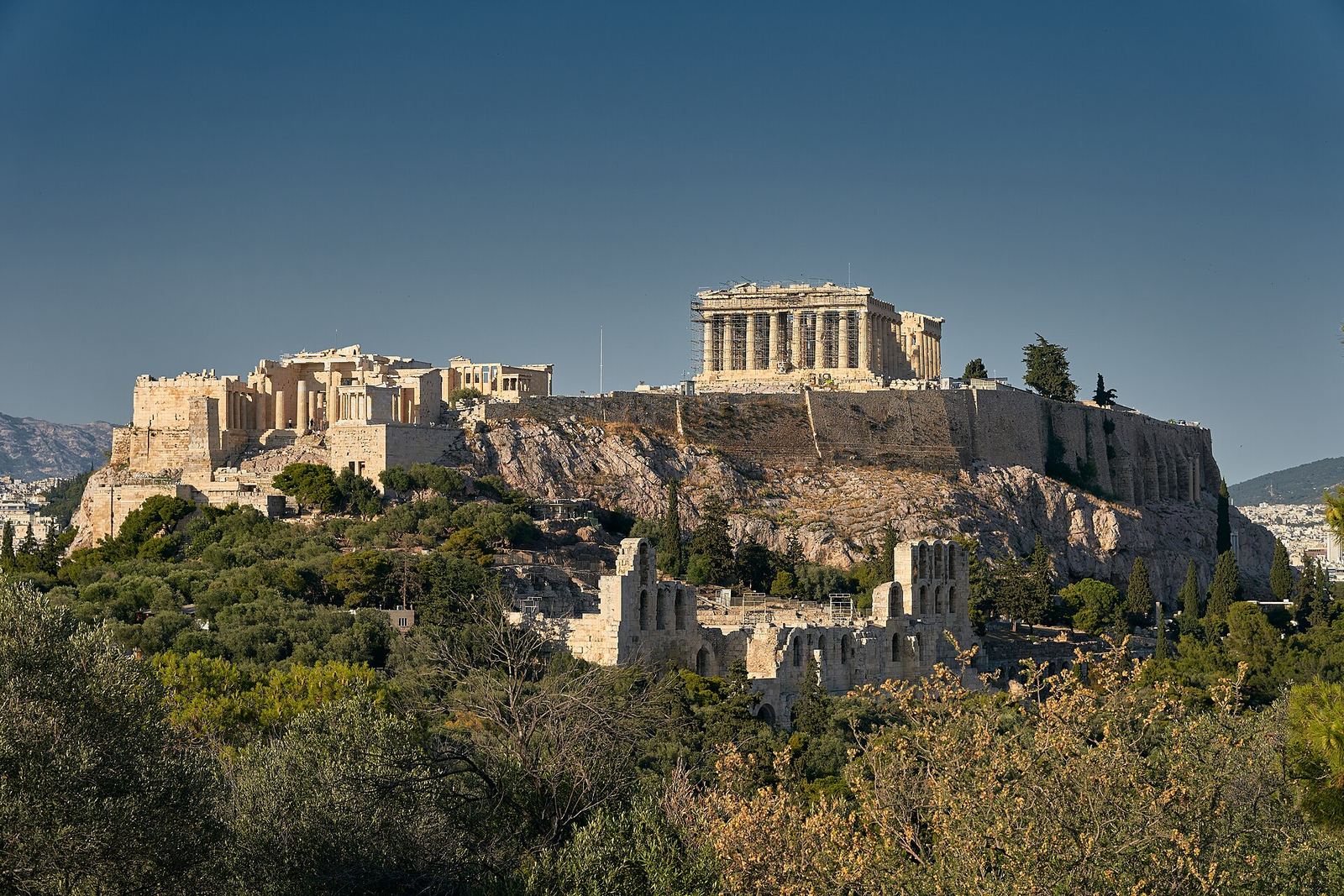
The Acropolis is the flat-topped rock in the middle of Athens where the city's temples stood. Most of what you see was built in a single generation after the Persians burned the old shrines in 480 BCE: the Parthenon, the great temple of Athena, went up between about 447 and 432 BCE under Pericles, with the gateway of the Propylaea and the smaller Erechtheion beside it. It is the most visited place in Greece, which is why your walk starts at 8:00 am, before the crowds and the coaches. The guide meets you under the Arch of Hadrian, a Roman gateway at the foot of the rock, and takes you up through the south entrance. The path climbs on worn marble that is smooth and slippery even when dry, so wear your grippy shoes and take the steps slowly; there is no rush, and the view over the city from the top is the point.
Your entry ticket was bought through the tour company, so there is nothing to buy at the gate. Bring your passport or ID in case it is asked for, and carry a small bag only: backpacks and big bags are not allowed on the Acropolis.
The food walk
At 10:30 am the second walk starts in Syntagma Square, the main square in front of Parliament, and spends three and a half hours in the streets and markets of the old center, stopping to taste as it goes. Eat a light breakfast; the tastings add up to lunch. The walk is on foot the whole way, on flat streets and in market halls. Tips and any extra food or drinks you want along the way are your own.
The handover between the two walks is short. The Acropolis walk ends at 10:00 am and you must be in Syntagma by 10:20 am. From the foot of the Acropolis it is about 15 minutes on foot along Amalias Avenue, or a short taxi; ask the first guide to point you the right way, and go straight there.
The afternoon
After 2:00 pm the day is yours. The Acropolis Museum at the foot of the rock holds the sculptures from the temples and takes about an hour and a half, with a cafe; opening hours and ticket price to confirm. Or simply go back to the hotel and rest. Sunset is 5:13 pm.
The day, hour by hour
Wake. A light breakfast: coffee and something small, because the food walk starts at 10:30.
Leave the hotel by taxi for the Arch of Hadrian, Leof. Vasilisis Amalias 50. Travel time from your hotel to confirm once the hotel is chosen.
Be under the Arch of Hadrian. The guide holds a sign reading "Alternative Athens".
Acropolis walk starts, two hours, up through the south entrance.
Walk ends. Go straight to Syntagma Square, about 15 minutes on foot or a short taxi.
Be in the lower part of Syntagma Square, in front of the PUBLIC store entrance, next to Everest and near McDonald's. The guide holds an "Alternative Athens" sign.
Food walk starts: three and a half hours of markets, bakeries and tastings.
Food walk ends in the center. You will not need lunch.
The Acropolis Museum, or back to the hotel to rest.
Sunset.
Sunrise in Athens is 7:07 am, so you leave the hotel at first light and the Acropolis walk is in full morning sun. Sunset is 5:13 pm, half an hour later than Jerusalem.
Bring and wear
Mid-November in Athens is mild, about 64–66°F (18–19°C) by day and 52–54°F (11–12°C) at night, with some rain to confirm. Layers and a light rain jacket.
Grippy walking shoes; the Acropolis marble is smooth and slippery.
A small bag only (no backpack on the Acropolis), with your passport, a water bottle, a hat and sunscreen.
Euros in small notes for tips and anything extra on the food walk.
Both confirmations on your phone: 0A45A0 and 415FA0.
The night before, Sunday in Athens
Check in, get euros from a cash machine if you have none, and ask the hotel how long a taxi takes to the Arch of Hadrian at 7:30 am.
Lay out grippy shoes, a small bag, passport, water bottle and both confirmations.
Set an alarm for 6:30 am. Keep dinner light.
Shabbat in Jerusalem
Shabbat, the Jewish day of rest, runs from Friday at sundown to Saturday after dark. In Jerusalem the whole city keeps it. You have two of them, November 6–7 and November 13–14, and both are planned the same way: Bradley is with you Friday morning, Saturday daytime is yours on foot, and Bradley joins you again for dinner on Saturday night.
What closes and when
Between roughly 2 and 4 pm on Friday, the City Center winds down. Shops close, the light rail and buses stop, trains stop, and most restaurants close. Machane Yehuda empties by about 2 pm. Everything stays closed until Saturday night, about an hour after sunset. On both Saturdays, Shabbat ends after 5 pm (5:23 pm on November 7, 5:18 pm on November 14), so plan dinner for after 6 pm.
What stays open
The Arthur. Breakfast is served as usual on Saturday morning.
Gett. The taxi app works all through Shabbat, everywhere in the city.
The Old City's Christian and Armenian quarters, and the markets of the Muslim Quarter, all reached on foot through Jaffa Gate.
The Western Wall, open for prayer. No photographs on Shabbat.
The Tower of David museum at Jaffa Gate, with tickets at the door (hours to confirm).
The Israel Museum, 10 am to 5 pm on Saturday, with tickets at the door (about 59 shekels, about $17).
The three exceptions
The rule for both weekends is simple: on foot, nothing booked for Shabbat itself, no transit. Three things are fine.
Tickets bought at the door. Museums that open on Saturday sell tickets on the spot, so nothing needs to be arranged ahead.
A Gett taxi as backup for a hill. The walk back up from the Western Wall, or home from the Israel Museum, is a climb. If your legs say no, call a Gett. It is the backup, not the plan.
A hosted dinner arranged beforehand and reached on foot. Friday night dinner is either at Bradley's home, if it is walkable, or with a local host family arranged ahead through Shabbat of a Lifetime or a similar service, about $70–95, booked 2–3 weeks ahead.
The Kotel at sundown
On Friday evening the Western Wall plaza fills with people coming to welcome Shabbat: local families, soldiers, students, visitors from all over the world. Groups sing and dance in the men's section; the women's section, on the right as you face the Wall, is quieter and you can stand close to the stones. It is free and needs no ticket.
Leave the hotel at 3:30 pm. Walk to Jaffa Gate (15–20 minutes) and on through the Old City down to the plaza; the whole walk is about 30 minutes, downhill. There is a security check at the entrance to the plaza. Candles are lit at 4:05 pm on November 6 and 4:00 pm on November 13, and the sun sets about 40 minutes later. Stay as long as you like. Once Shabbat has begun, keep your phone in your bag; people do not take photographs at the Wall on Shabbat.
Coming back is about 30 minutes uphill in the dark. Walk with the crowd heading up toward Jaffa Gate, or call a Gett taxi. Dress warm: it will be about 50–52°F (10–11°C) by the time you walk home.
On foot from the Arthur: both weekends
The Mamilla promenade, 10 minutes. Flat and wide, leading to Jaffa Gate. Good at sunset.
Jaffa Gate and the Old City, 15–20 minutes. The Christian and Armenian quarters and the Muslim Quarter markets are open; the Jewish Quarter is quiet.
The Tower of David museum, 15–20 minutes, at Jaffa Gate. Tickets at the door.
The Western Wall, about 30 minutes downhill through the Old City. Open for prayer; no photographs.
The Israel Museum, 35–40 minutes each way. Open 10 am to 5 pm on Saturday, tickets at the door. Only if you want the walk; Gett is the backup.
The hotel terrace, no minutes at all. A good choice for the second Saturday.
Lunch and dinner
Friday night dinner, both weekends: Bradley's home if it is walkable, otherwise a hosted Shabbat dinner arranged ahead and reached on foot (Shabbat of a Lifetime or similar, about $70–95). Which one, and the address and time: to confirm, decided for both Fridays at the same time.
Saturday lunch, both weekends, needs a plan, because most City Center restaurants are closed. Ask the Arthur whether they serve a Shabbat lunch or can hold a cold plate for you, or have lunch at Bradley's if it is walkable to confirm.
Saturday night dinner, both weekends: with Bradley, after Shabbat ends. On November 14 it is the farewell dinner.
Shabbat times in Jerusalem, November 2026
Day
Event
Time
Friday, November 6
Candle lighting (Shabbat begins)
4:05 pm
Saturday, November 7
Havdalah (Shabbat ends)
5:23 pm
Friday, November 13
Candle lighting (Shabbat begins)
4:00 pm
Saturday, November 14
Havdalah (Shabbat ends)
5:18 pm
Practical
The Arthur Hotel
Arthur Hotel, Dorot Rishonim 13, Jerusalem. Phone +972 2-623-9999.
Show this to the taxi driverמלון ארתור, דורות ראשונים 13, ירושליםArthur Hotel, Dorot Rishonim 13, Jerusalem
Dorot Rishonim is a pedestrian lane in Nahalat Shiva, in the City Center, so taxis drop you at the nearest corner and you walk the last few steps. Which corner, and help with luggage: to confirm with the hotel. Breakfast is included every morning, and there is an afternoon wine hour. For Wednesday and Thursday, when you leave before breakfast, ask for a packed breakfast to collect the night before. On arrival the hotel will point you to the Home Front Command app; install it. The location of the nearest shelter: to confirm with the front desk on your first day.
Bradley
Phone to confirm. Address to confirm.
Bradley is with you Sunday to Thursday, and on Friday mornings until early afternoon, when he goes home to prepare for Shabbat. He is not available Friday afternoon or Saturday daytime. He joins you for dinner on both Saturday nights after Shabbat ends. Save his number in your phone and on paper.
Gett and the light rail
Gett is Israel's taxi app. It is metered and cashless, with no haggling, and it works everywhere, including on Saturday. Install it before you fly and attach a card. To use it: open the app, set the pickup point (from the hotel, choose the corner of the lane), type the destination, and confirm. The app shows the car, its plate and its arrival time, and the fare is charged to your card at the end. Use it for anything uphill, anything after dark, and the ride back from the Old City.
The light rail runs along Jaffa Road past the hotel. Machane Yehuda is two stops; Navon train station is four. It does not run on Shabbat. Fares and how to pay (a Rav-Kav card or an app): to confirm.
Money, cards and tipping
Israel uses shekels, about 3.5 to the dollar. 100 shekels is about $29.
Cards are accepted nearly everywhere. Keep 200–300 shekels (about $60–85) in cash for market stalls and tips.
Tip tour guides 40–50 shekels (about $11–14) per person per day on group tours.
In restaurants, tip 10–15%.
Carry a backup card separately from your main one.
Jerusalem days (typical for mid-November: high 66–68°F (19–20°C), low 50–52°F (10–11°C), about 3 rainy days in the month):
Grippy walking shoes; the Old City stone is polished and slippery
Layers: a light sweater or fleece for the cool evenings
A light rain jacket
Modest clothes: shoulders and knees covered, and a scarf or shawl
A small day bag, a water bottle, sunglasses
Athens, Monday, November 16 (about 64–66°F (18–19°C) by day, 52–54°F (11–12°C) at night to confirm):
Grippy shoes for the slippery marble of the Acropolis
A small bag only, no backpack, with passport, water, hat and sunscreen
Layers and a light rain jacket
Euros in small notes for tips
The Dead Sea day, Thursday (high 79–82°F (26–28°C), low 62–64°F (17°C), dry, strong sun):
Swimsuit, water shoes, towel
Wide hat, sunscreen, sunglasses, plenty of water
Grippy shoes for Masada and Ein Gedi
A plastic bag for the wet swimsuit, and a change of clothes
Passports and a printed copy of the ETA-IL permit
No shaving that morning
Shabbat and the Kotel evenings:
A warm layer and a light rain jacket for the walk home after dark
Shoulders and knees covered, and a scarf or shawl
Grippy shoes for the walk down through the Old City
Phone charged, with Gett ready as the backup
The travel days:
Passport, the printed ETA-IL permit, and the small entry card from passport control
Medication for the trip plus a week, in your carry-on
Layers for the plane and a change of clothes in your carry-on
Phone, charger and the eSIM working
The hotel's address in Hebrew, for the taxi
Costs for two
Paid: $198 for the Masada tour and 63 shekels (about $18) for the tunnels. The coast tour ($218) was canceled; the refund to confirm.
Booked: 340 shekels (about $97) for the Abraham Tours walk, payment to confirm.
On site: 334 shekels (about $95) in Thursday entry fees, plus whatever Wednesday's outing costs (Latrun 30 and Ayalon 27 shekels each, or the City of David 40–75 shekels, or the Tower of David show 59–69 shekels).
Friday food walk: $240 (Delicious Israel) or 480 shekels (about $137, Yalla Basta), once chosen.
Tel Aviv train: about $20.
Athens, Monday, November 16: both Alternative Athens walks (€45 and €69) were covered by coupons; nothing to pay.
Entry permit and passport
US citizens need an ETA-IL electronic travel authorization to enter Israel. Apply at israel-entry.piba.gov.il; it costs 25 shekels (about $7). Apply at least 72 hours before you fly. Make sure your passport is valid well past November 15. Print a copy of the approved permit and bring it on Thursday's Dead Sea tour. At passport control you are given a small entry card instead of a stamp; keep it with your passport until you leave.
Still to arrange
Apply for the ETA-IL permit at israel-entry.piba.gov.il (25 shekels), at least 72 hours before flying, and print a copy.
Choose the Friday food walk: Delicious Israel, Yalla Basta or the Bite Card.
Decide Wednesday, November 11 with Bradley: Latrun and the Ayalon Institute (book Ayalon by phone), the City of David and the Israel Museum, the Tower of David, or nothing.
Confirm the $218 refund for the canceled coast tour with Tourist Israel.
Athens: the hotel, and the taxi time from it to the Arch of Hadrian for 7:50 am on Monday, November 16.
Ask the Arthur: a quiet room, where taxis drop off and help with luggage, packed breakfasts for Wednesday and Thursday, whether they serve Shabbat lunch, and where the shelter is.
Arrange Shabbat dinners on November 6 and 13, and Saturday lunches on November 7 and 14.
Have Bradley check the Monday train timetable and fares to Tel Aviv.
Get the Athens flight time for November 15.
Buy travel insurance that covers medical evacuation, pre-existing conditions, travel-advisory exclusions and cancellation.
Set up an eSIM with a reachable number; install Gett, attach a card and test it.
A few words of Hebrew
English
Hebrew
Say it
Hello / goodbye
שלום
shalom
Thank you
תודה
toda
Please / you're welcome
בבקשה
bevakasha
Yes
כן
ken
No
לא
lo
Excuse me / sorry
סליחה
slicha
How much is it?
כמה זה עולה?
kama ze ole
Where is…?
איפה…?
eifo
The bill, please
חשבון, בבקשה
cheshbon bevakasha
Water
מים
mayim
Good Shabbat
שבת שלום
Shabbat shalom
I don't speak Hebrew
אני לא מדברת עברית
ani lo medaberet ivrit
Help!
הצילו!
hatzilu
The Arthur Hotel
מלון ארתור
malon Arthur
Flights
Keep the flight confirmations on your phone and a printed copy in your carry-on, with your passport and the ETA-IL permit.
Outbound: Newark to Tel Aviv, via Paris
Airline
Air France, business class
Booking reference
Y7LEIS
Passenger
AVA JAHN, as on the passport
First flight
AF071, Newark to Paris
Leaves
Tuesday, November 3, 5:05 pm, Newark
Arrives Paris
Wednesday, November 4, 6:10 am
Connection
2 hours 50 minutes in Paris
Second flight
AF962, Paris to Tel Aviv (Ben Gurion)
Leaves
Wednesday, November 4, 9:00 am, Paris
Lands
Wednesday, November 4, 2:15 pm, Ben Gurion Airport
After landing
About an hour for passport control and bags, then a 45–60 minute taxi to the Arthur. Expect the hotel between 4:30 and 5:30 pm.
Met by
Bradley, at the airport or at the hotel to confirm
Paid
$541.60 on the Visa plus 140,000 Flying Blue miles. Changes or refunds cost a 70-euro fee.
Departure: Tel Aviv to Athens
Date
Sunday, November 15
From
Ben Gurion Airport, Tel Aviv
To
Athens
Airline and flight
to confirm
Departure time
to confirm
Terminal
to confirm
Getting there
Taxi from the hotel, 45–60 minutes, or the train from Navon station, about 25 minutes
At the airport
3 hours before the flight
With you
Bradley, if he can
Airport timeline, Sunday, November 15
Departure time to confirm. Once it is known, work back from the flight: at the airport 3 hours before, leave the hotel 4 hours before by taxi.
Breakfast done, bags closed, checkout at the front desk. Passport, entry card and phone in your carry-on.
Leave the Arthur by taxi: 45–60 minutes to Ben Gurion, with an allowance for Sunday traffic. If you take the train instead: light rail 4 stops or a 15-minute taxi to Navon station, the security check at the station, then about 25 minutes on the train.
At the airport. Security questions before check-in, then check-in and bag drop.